Short answer
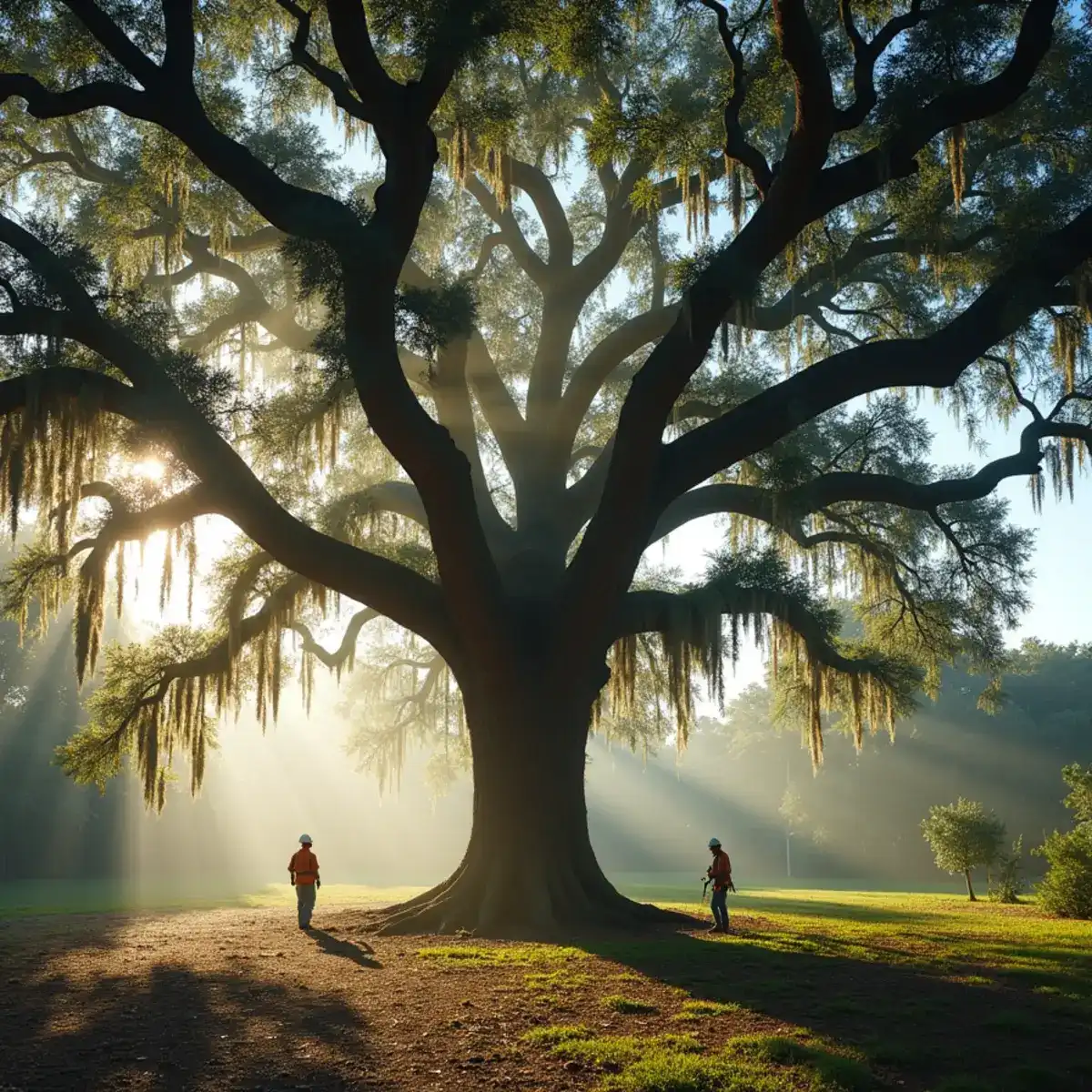
Southern live oak is the defining tree of coastal Northeast Florida. It handles salt, wind, drought, and hurricanes better than almost anything else that grows here, and a healthy one can live for centuries — the specimens in St. Augustine and Mandarin that people drive out of their way to see were standing before Florida was a state.
They are also frequently mistreated, usually with the best intentions. Here is what these trees actually need.
First: make sure it is actually a live oak
Half the "live oaks" people call us about are laurel or water oaks, and the distinction matters enormously because their lifespans differ by a factor of five.
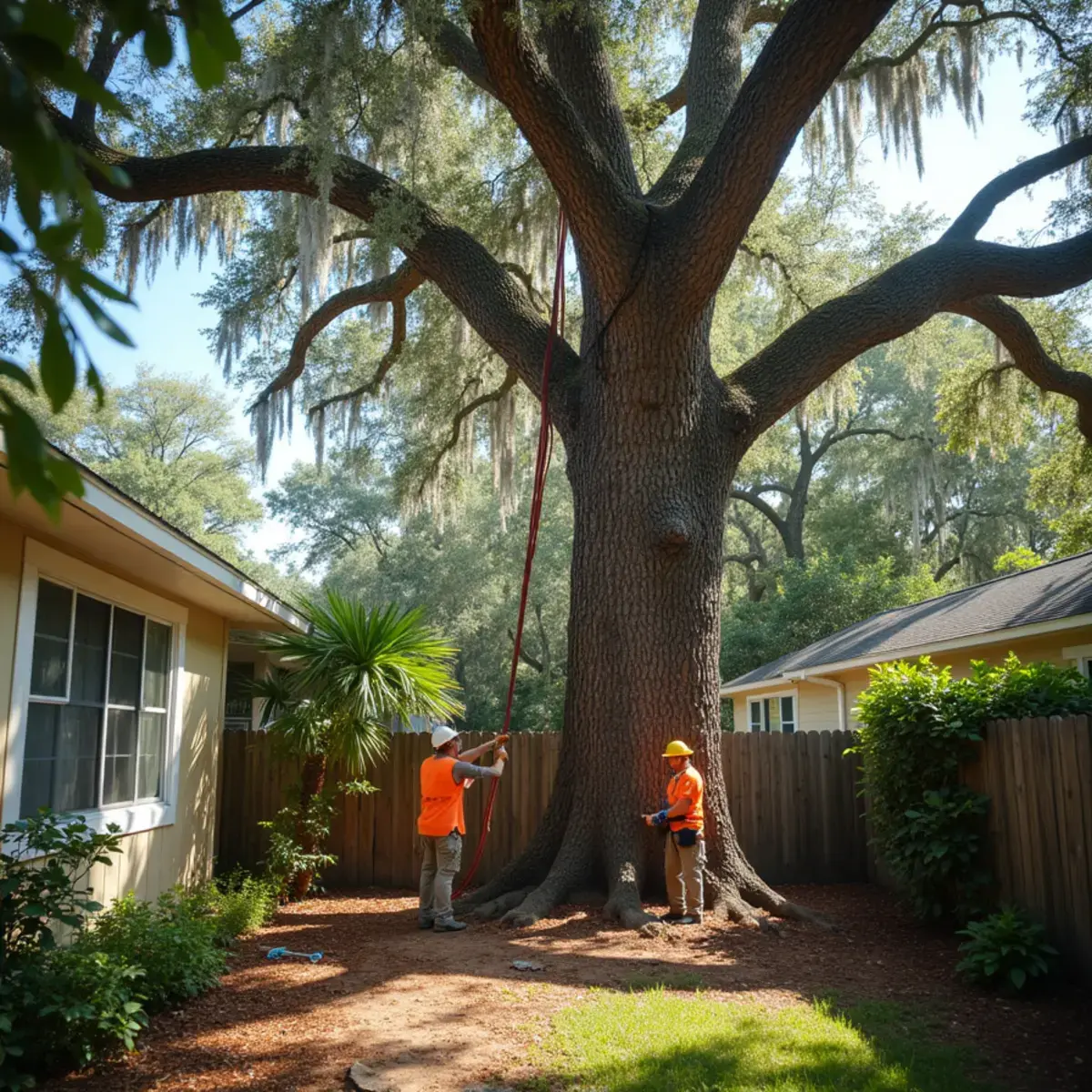
Live oak leaves are thick, leathery, dark green on top, with smooth or slightly rolled edges, and the tree holds them nearly year-round — dropping the old set in spring as the new set pushes out. The growth habit is unmistakable: massive horizontal limbs spreading wider than the tree is tall, often sweeping down toward the ground.
Laurel and water oak leaves are thinner and lighter, and the trees grow upright and vase-shaped rather than spreading. They grow fast, typically live 50 to 70 years, and start decaying internally well before that. A live oak may run 200 to 300 years or more. If you are deciding whether to invest in a tree, this is the first question to answer.
Pruning: less than you think
Mature live oaks need remarkably little. Deadwood removal every few years, reduction of genuinely over-extended limbs, and clearance where a limb is against a roof. That is usually the whole list.
Late winter into early spring is the ideal window. Keep total removal under about 25 percent of live canopy in a season on a healthy tree, and considerably less on an old or stressed one.
What to avoid: raising the canopy aggressively. Live oaks naturally carry low, heavy horizontal limbs, and those limbs are part of the structural system — removing them to "clean up" the tree shifts load higher and changes the tree’s balance. Those low sweeping limbs are also the thing that makes a live oak worth having.
Young live oaks are the opposite case. A five-year-old tree with two competing leaders can be corrected with one cut; the same defect at forty years needs cabling and bracing or eventually costs you the tree.
Roots: the thing that actually kills them
Live oaks rarely die of disease in our area. They die of root damage, and almost always from something a person did.
The root system extends well beyond the drip line and sits mostly in the top 18 inches of soil. Everything that happens on that ground affects the tree: driveway pours, utility trenching, pool digs, additions, regrading, and heavy equipment compacting the soil during construction.
The delay is what makes this so insidious. A tree that loses a third of its roots in year one looks fine through year two, thins in year three, and starts dying back in year four — by which point nobody connects it to the driveway.
If you are planning work near a significant oak, protect the root zone before equipment arrives: fence it at the drip line, keep traffic and material storage out, and route trenches around rather than through. It costs almost nothing at the planning stage and it is the single highest-value thing you can do for the tree.
Mulch, water, and the buried root flare
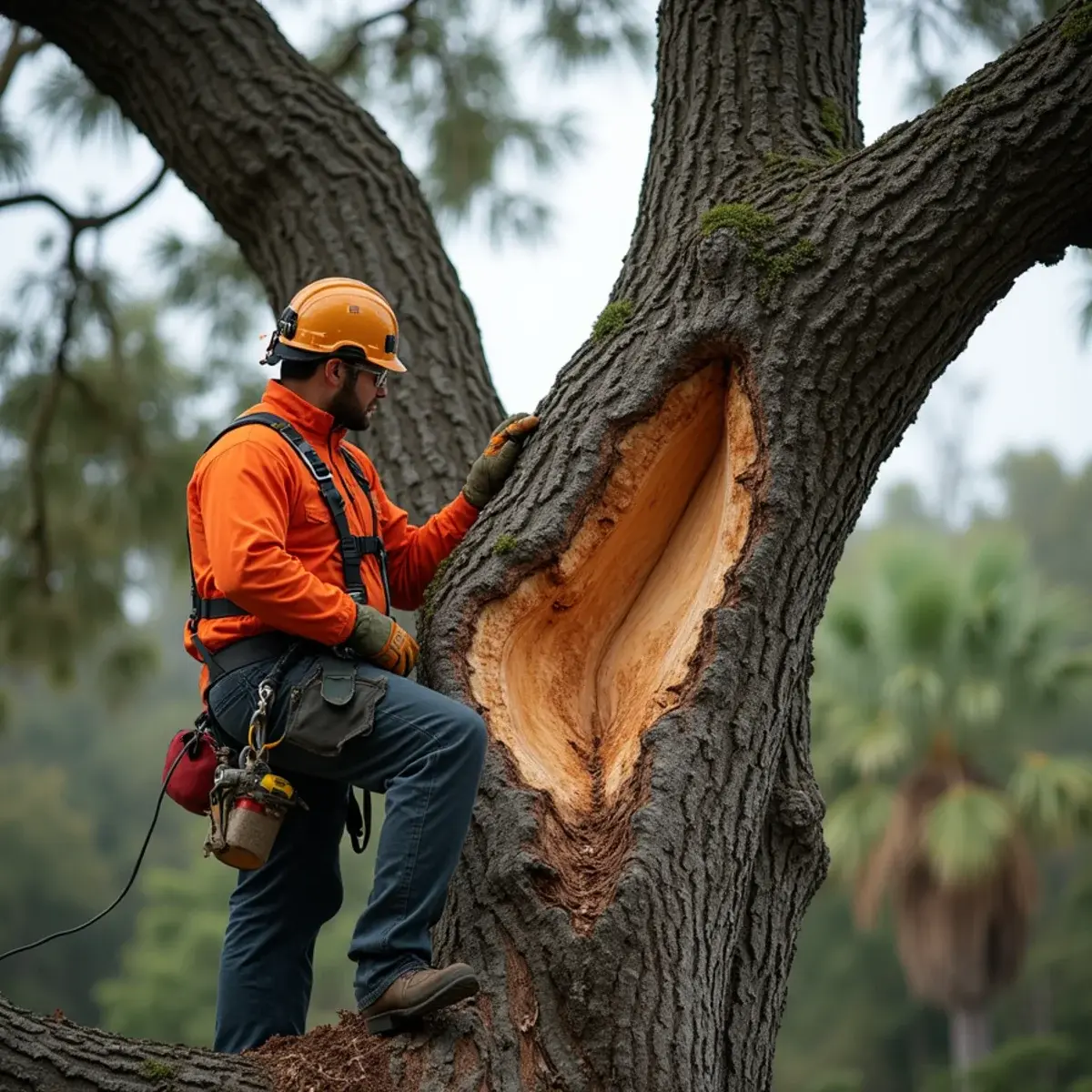
The most common avoidable problem we find on suburban live oaks is a buried root collar. Years of mulch and sod piled against the trunk keep the bark constantly moist, which invites rot exactly where the tree needs the most strength.
Mulch should be a wide, shallow ring — two to three inches deep, spread out toward the drip line, and pulled back several inches clear of the trunk so you can see the flare where the trunk widens into the roots. The volcano of mulch piled against the trunk that landscapers love is actively harmful.
Watering: established live oaks in Northeast Florida generally need no supplemental irrigation. What hurts them is lawn irrigation running daily to keep St. Augustine grass green, which keeps oak root zones far wetter than they want. Young trees are different — deep watering once a week during dry spells for the first two or three years is what establishes them.
What actually goes wrong with live oaks here
A few conditions come up repeatedly on the properties we work in St. Augustine, Ponte Vedra, and Mandarin.
The case for planting one
When a laurel oak or water oak comes out of a yard around here, we push hard for a live oak going back in. It is a slower tree — you are planting for the next owner as much as for yourself — but it is a fundamentally better one.
Live oak is among the most wind-resistant species in Florida, it handles salt and drought, it supports enormous amounts of local wildlife, and it will outlive the house. Plant it at least 20 to 25 feet from structures to give the root system and the spread room to develop.
Frequently asked questions
The bottom line
Live oaks ask for very little: leave the roots alone, keep mulch off the trunk, prune lightly in late winter, and correct structural problems while the tree is young.
If you have one worth protecting and something has changed on the property — construction, a new lean, dieback — our tree health and risk assessment will tell you what is happening before it becomes irreversible.
Want a real answer about your specific tree?
Call +1 (208) 635-2100 for a free on-site estimate across St. Augustine and St. Johns County. We will tell you plainly what it needs — including when the answer is nothing.
- 47 five-star reviews
- Licensed & insured
- 24/7 storm response