Have Faith Trees — tree service in St. Augustine, FL
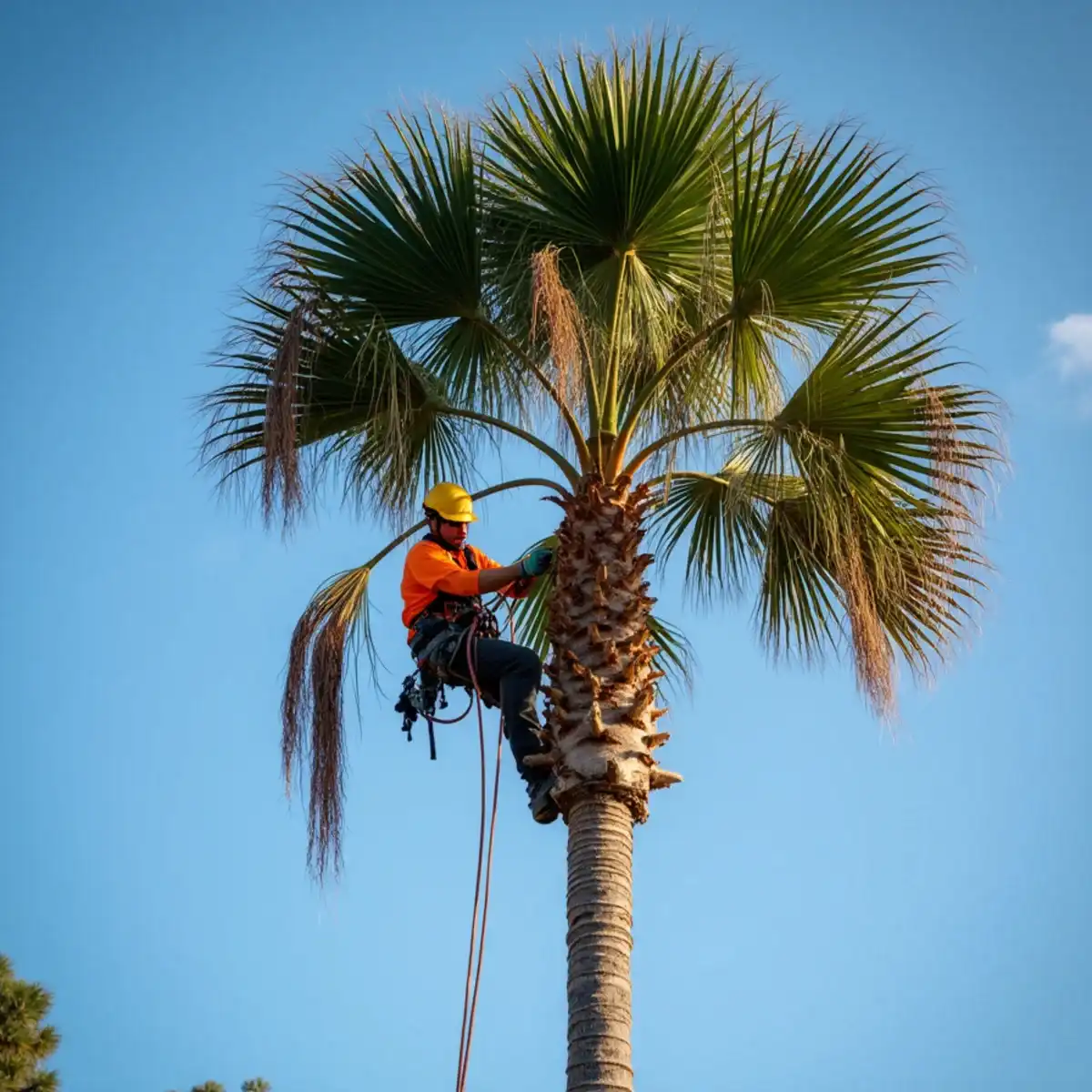
Climber trimming a sabal palm with a chainsaw above a St. Augustine, FL property

St. Augustine, FL

Palm Tree Trimming in St. Augustine, FL

Palms are everywhere in St. Augustine and they are pruned wrong more often than any other tree in Florida. The over-trimmed "pineapple" look you see all over A1A is not a style — it is damage. Palms pull nutrients back out of older fronds, so stripping green fronds starves the tree and weakens the trunk right where the wind loads it.

  • 9-and-3 pruning standard
  • Seed pods and boots removed
  • Ganoderma inspection included
  • Debris hauled away

Short answer

Palm tree trimming in St. Augustine should happen about once a year, and it should never take green fronds off. Have Faith Trees works to the 9-and-3 standard the University of Florida extension service recommends — dead fronds, seed pods and loose boots removed, healthy canopy left intact — and checks every trunk base for ganoderma while we are up there. Sabal, queen, Washingtonia and Canary Island date palms.

We trim palms the way the University of Florida extension service and the ISA both recommend: dead and fully brown fronds come off, seed pods and old boots come off, and healthy green fronds stay on. The tree looks fuller than your neighbor’s and it holds up better in a storm.

Signs your palms are due for attention

  • A skirt of brown, hanging dead fronds around the trunk
  • Heavy seed pods or flower stalks that drop fruit onto driveways, pool decks, and walkways
  • Fronds rubbing the roof, gutters, or blocking exterior lighting and cameras
  • Old frond bases ("boots") harboring rats, roaches, or wasp nests
  • A conk or shelf fungus emerging low on the trunk — a possible sign of ganoderma butt rot
  • A collapsing or drooping spear (the newest, upright frond) — an urgent sign of bud rot
  • Frizzled, deformed new growth, which often points to a nutrient deficiency rather than a pruning problem

What’s included with palm tree trimming & removal

Every line below is part of the quoted price. No hidden fees, and nothing discovered halfway through the job.

  • Dead and fully brown fronds removed, plus everything hanging below horizontal
  • Seed pods and flower stalks taken off — the projectiles in a storm and the mess on your pool deck
  • Loose boots cleared, or the trunk shaved smooth if you want the clean look
  • Trunk base inspected for ganoderma conks, and the canopy checked for spear collapse and nutrient deficiency
  • Tools sanitized between palms so we do not carry fusarium wilt from one tree to the next
  • Fronds and debris hauled away, deck and driveway blown clean

Typical timeline

Most residential palm service is a half-day. A single tall Washingtonia or Canary Island date palm takes longer than a row of short sabals.

Quoted separately

  • Palm fertilization — a slow-release palm-specific feed is a separate visit, and worth it if we find a deficiency
  • Removal of a palm we find has ganoderma — quoted separately once you have seen the conk yourself

Free estimate for palm tree care in St. Augustine

Call +1 (208) 635-2100 and describe the tree, or send the form below and we will get back to you the same day.

  • 47 five-star reviews
  • Licensed & insured
  • 24/7 storm response

Palm Tree Care on the job in St. Augustine
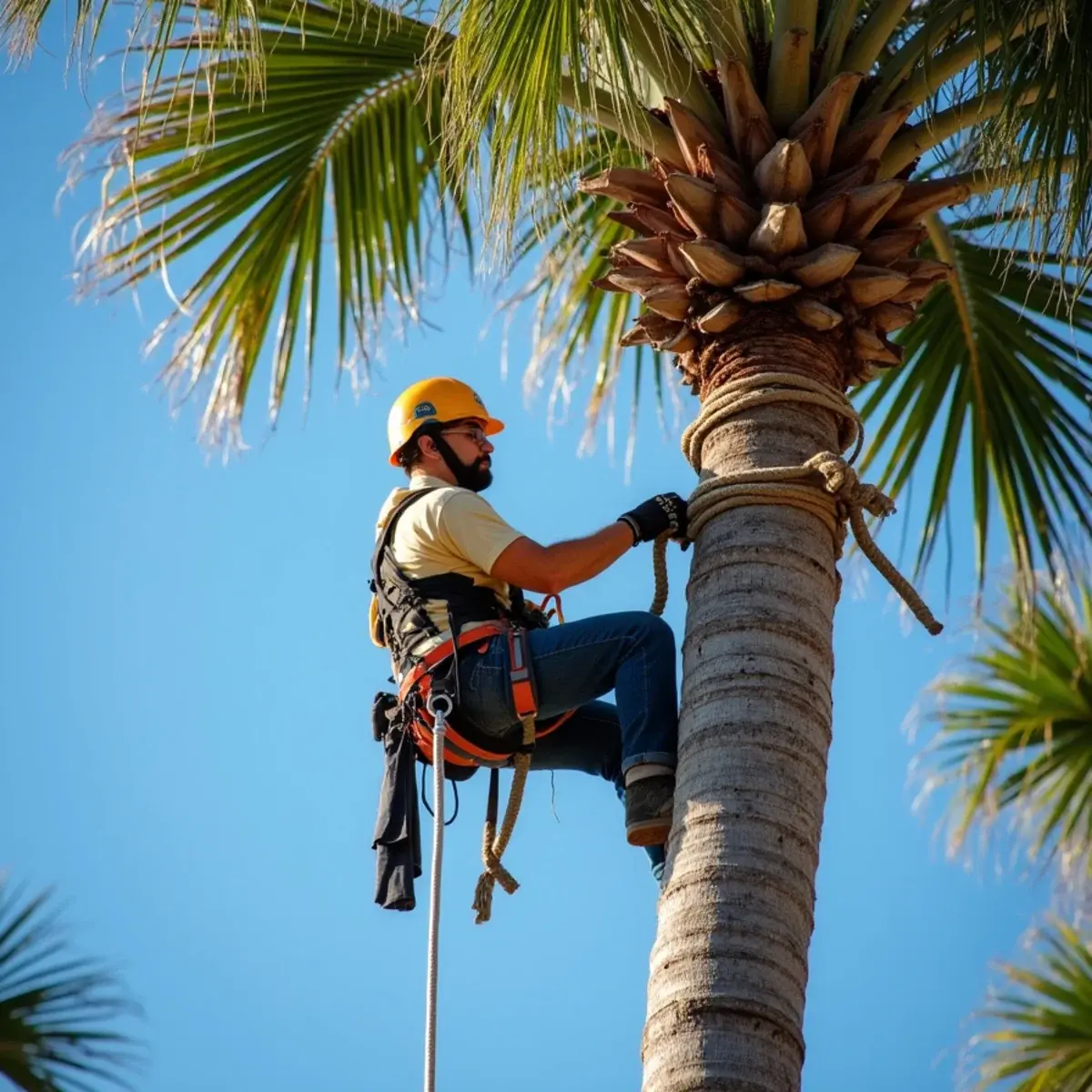
Real work, photographed on St. Johns County properties.

  • Climber in sabal palm, palm tree trimming & removal in St. Augustine, FL
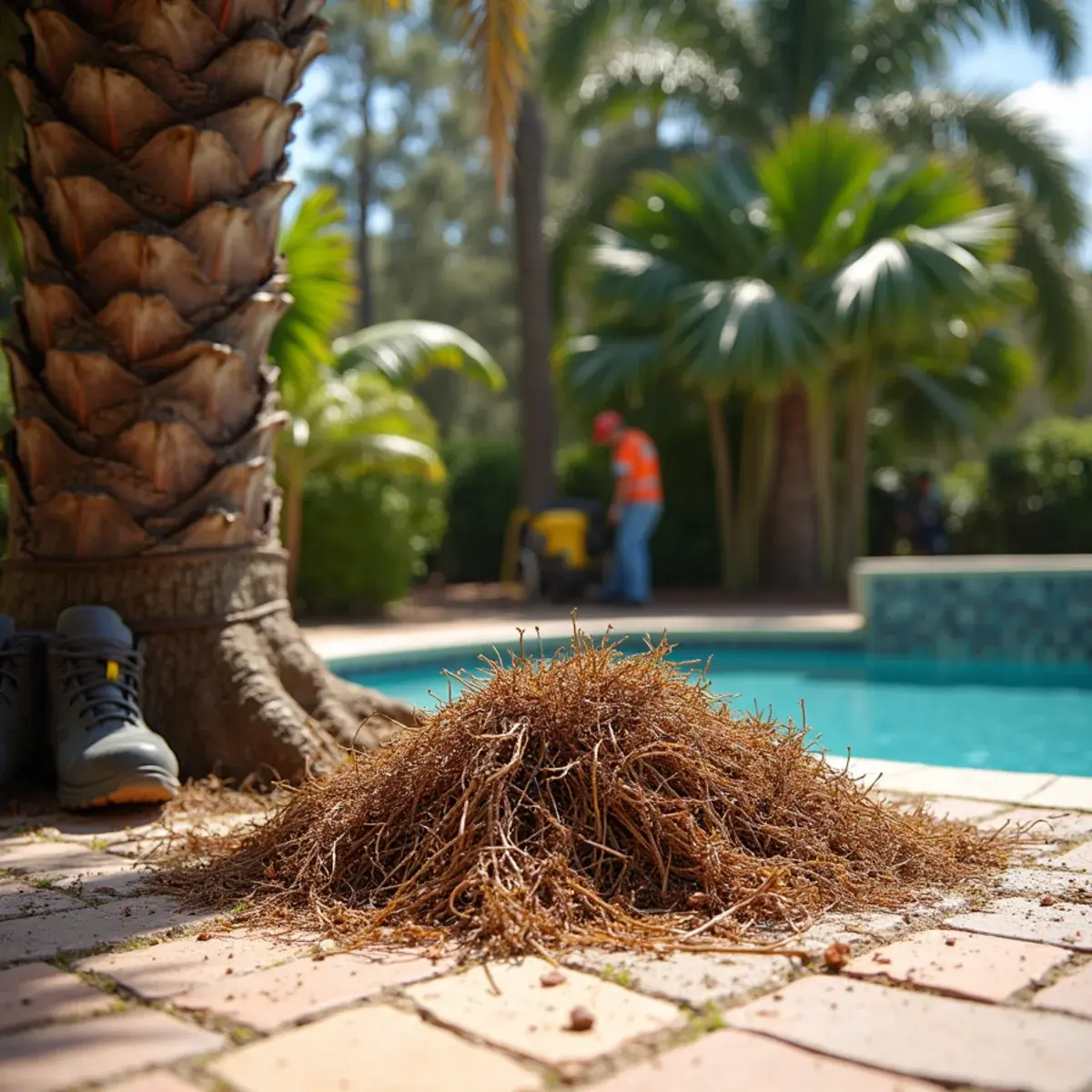
  • Frond and seedpod removal, palm tree trimming & removal in St. Augustine, FL
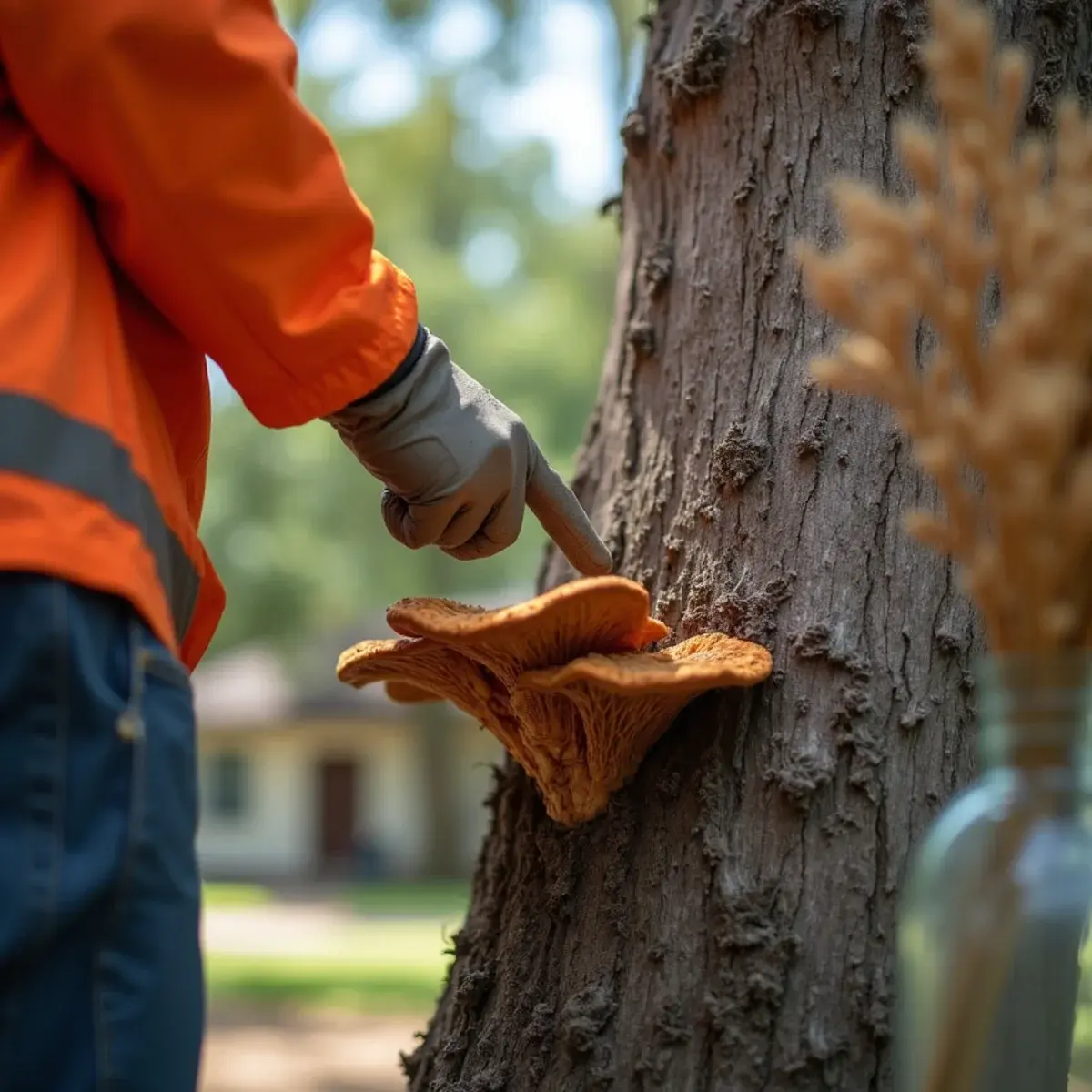
  • Ganoderma conk inspection, palm tree trimming & removal in St. Augustine, FL

The 9-and-3 rule, and why over-pruning hurts

The standard we work to is simple: never remove fronds that sit above the horizontal — imagine a clock face, and leave everything between 9 o’clock and 3 o’clock. Anything hanging below horizontal is fair game, along with fully dead fronds, seed pods, and loose boots.

Cutting into that 9-to-3 zone does real harm. Palms have a single growing point at the top of the trunk, and green fronds are the only food source they have. Over-pruned palms grow thinner trunks, become more susceptible to cold damage and nutrient deficiency, and — counter to what people believe — actually fail more often in hurricanes, because the remaining fronds cannot shield the bud and the narrowed trunk section is a weak point for years.

There is also a practical concern: a palm has no ability to compartmentalize wounds the way a hardwood does. Every cut into the trunk is permanent, and dirty tools spread fatal diseases like fusarium wilt from palm to palm. We sanitize between trees for that reason.

The palms we work on around St. Johns County

The coast throws a specific palette of palms at us, and each one gets handled differently.

  • Sabal palm (cabbage palm) — the Florida state tree and the most common palm here. Extremely storm-tolerant. Owners choose between a "booted" look and a clean "hurricane cut" trunk where boots are shaved; both are fine, and shaving is purely cosmetic.
  • Queen palm — fast-growing, heavy seed producer, and the biggest source of fruit mess on driveways. Prone to manganese deficiency, which shows as frizzled new growth and is treatable.
  • Washingtonia (Mexican fan palm) — grows tall fast and builds a long dead skirt. Needs regular attention and, at height, a climber rather than a ladder.
  • Canary Island date palm — heavy, spiny, and expensive to maintain; the classic candidate for professional trimming only.
  • Pindo and pygmy date palms — smaller ornamentals that mostly need seed pod removal and shaping.
  • Coconut palm — occasional this far north; cold-sensitive and usually pruned for falling-nut liability more than health.

Palm removal and the diseases that force it

Some palms come out because they were planted too close to a foundation or a pool deck. Many come out because of disease, and palm diseases are usually terminal.

Ganoderma butt rot

The most common killer of mature palms in Northeast Florida. You will see a hard, shelf-like conk with a shiny reddish-brown top forming low on the trunk. There is no treatment and no cure. Once the conk appears, the interior of the lower trunk is already decayed and the palm is a falling hazard. It needs to come out, and the spores persist in the soil, so we advise against replanting another palm in the same spot.

Bud rot and lethal bronzing

A collapsing spear leaf is an emergency sign. Bud rot follows storm flooding and cold damage; lethal bronzing is a phytoplasma spread by insects and moves through neighborhoods. Both kill quickly. Early diagnosis occasionally allows antibiotic treatment for lethal bronzing on high-value palms — but once the spear collapses, the palm is gone.

Nutrient deficiency

Not everything that looks like disease is disease. Potassium deficiency produces yellow-orange spotting on the oldest fronds; manganese deficiency ("frizzle top") deforms the newest ones. Both are fixable with the right palm-specific fertilizer, and diagnosing them correctly can save a palm someone else told you to remove.

Getting palms ready for hurricane season

Palms handle wind better than nearly any tree we work on — that flexible trunk and shredding frond design evolved for exactly this. What they do not handle is being loaded with dead fronds and heavy seed pods that turn into projectiles at 80 miles an hour.

A pre-season palm service is quick and cheap: strip the dead fronds, take off the seed stalks, clear anything hanging below horizontal, and inspect the trunk base for conks. We schedule most residential palm work between March and May for exactly this reason. If you want the full pre-season plan for the rest of your trees too, our hurricane preparation service covers the property as a whole.

How palm tree care works, step by step

The same sequence on every job, so you know what is happening and when.

  1. 01Identify the palm and its needsA sabal, a queen and a Canary Island date palm are three different jobs with three different risks. We work out which you have before quoting.
  2. 02Sanitize between every palmFusarium wilt is fatal and spreads on contaminated blades. Tools are sterilized between trees — this is the step most crews skip.
  3. 03Cut to the 9-and-3 lineEverything at or above horizontal stays. Dead fronds, everything hanging below horizontal, seed pods and flower stalks come off.
  4. 04Inspect the trunk baseWe check low on the trunk for the hard reddish conk that means ganoderma butt rot, and look at the spear for signs of bud rot.
  5. 05Clear the deck and driveFronds and pods hauled away, pool deck and driveway blown clean. Palm debris is heavy and messy, and leaving it is not finishing the job.

Why choose Have Faith Trees for palm tree care

8+ years on Northeast Florida trees, 47 five-star Google reviews, licensed and fully insured — and these four things specific to this job.

  • We refuse the pineapple cut

    Over-stripping starves a palm, narrows the trunk permanently at that height, and makes it more vulnerable in a storm — not less.

  • Ganoderma caught early

    Once that conk appears the palm is a falling hazard with no treatment available. Finding it during a routine trim beats finding out during a storm.

  • Yellow fronds diagnosed, not just cut

    Most yellowing here is a potassium deficiency in our sandy soil. Cutting those fronds off accelerates the decline; feeding the palm fixes it.

  • Coastal palms are most of what we do

    From the beaches to Vilano and Crescent Beach, palm work is weekly for us — we know how they fail on this stretch of coast.

What affects the price

We do not publish flat prices, because an honest tree quote depends on the specific tree in front of us. These are the factors we are weighing when we walk your property.

Palm height
A pygmy date palm is a ladder job; a 45-foot Washingtonia requires a climber or a lift.
Number of palms
A row of six queen palms trimmed on one visit costs far less per palm than a single call-out.
Species and difficulty
Canary Island date palms are heavy, spiny, and slow to work; sabal palms are quick by comparison.
Boot removal
Shaving old frond bases off a sabal trunk for a smooth look is extra labor over standard trimming.
Seed pod and fruit load
Heavy fruiting palms over a pool deck or driveway take longer to clean up after.
Access
Palms behind a screen enclosure or over a pool need rope work rather than a straightforward drop.

Palm Tree Care questions we get asked

How often should palm trees be trimmed in Florida?
Once a year covers most palms in St. Augustine. Heavy fruiting species like queen palms sometimes want twice a year to keep the mess down. Sabal palms can go longer if you like the natural look.
Is a "hurricane cut" bad for palms?
Yes, when it means stripping the canopy down to a few upright fronds. That weakens the trunk, starves the palm, and makes cold and disease damage more likely. Proper storm prep removes dead fronds and seed pods and leaves the green canopy alone.
What is the shelf fungus growing at the base of my palm?
Most likely ganoderma, and if it is, the palm cannot be saved. The lower trunk decays internally before symptoms show in the canopy, so it becomes a falling hazard. We will confirm what we are looking at and recommend removal if it is ganoderma.
Can you remove a palm without damaging my pool deck?
Yes. Palms are usually sectioned from the top down and lowered on rope, which is exactly how we handle palms overhanging pools, cages, and pavers.
My palm has yellow fronds. Is it dying?
Often it is a potassium or magnesium deficiency, which is common in our sandy soil and correctable with a proper palm fertilizer. Yellowing on the oldest lower fronds is usually nutritional; discoloration starting in the newest growth is more concerning and worth an inspection.

Related tree services

Further reading

Palm Tree Trimming & Removal across Northeast Florida

We run palm tree trimming & removal jobs throughout St. Johns County and the surrounding coast. Pick your city for local tree notes and conditions.

Book palm tree care in St. Augustine

Free on-site estimate, written price before we start, and full cleanup included. Same-day response for genuine hazards.

  • 47 five-star reviews
  • Licensed & insured
  • 24/7 storm response
Call NowFree Quote

47 five-star reviews · Licensed & insured · Free estimates