
Short answer
Defects a support system can address
What’s included with tree cabling & bracing
Free estimate for cabling & bracing in St. Augustine
Cabling & Bracing on the job in St. Augustine
Cabling vs. bracing — two different jobs
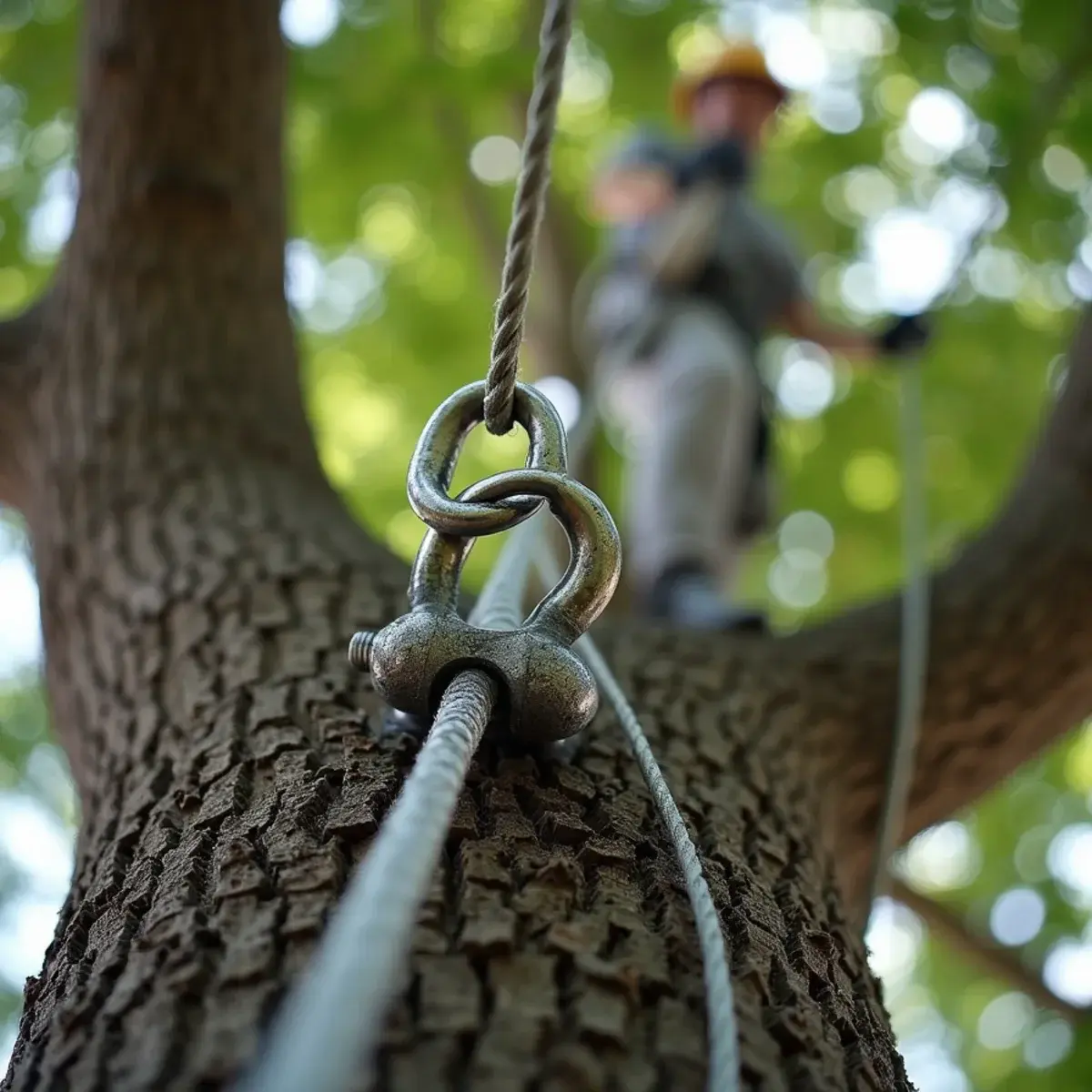
Cabling is high in the canopy. Steel cable or a synthetic dynamic system runs between two limbs, installed roughly two-thirds of the way from the defect to the branch tips. It limits how far the limbs can move apart in wind, reducing stress on the weak union without immobilizing the tree.
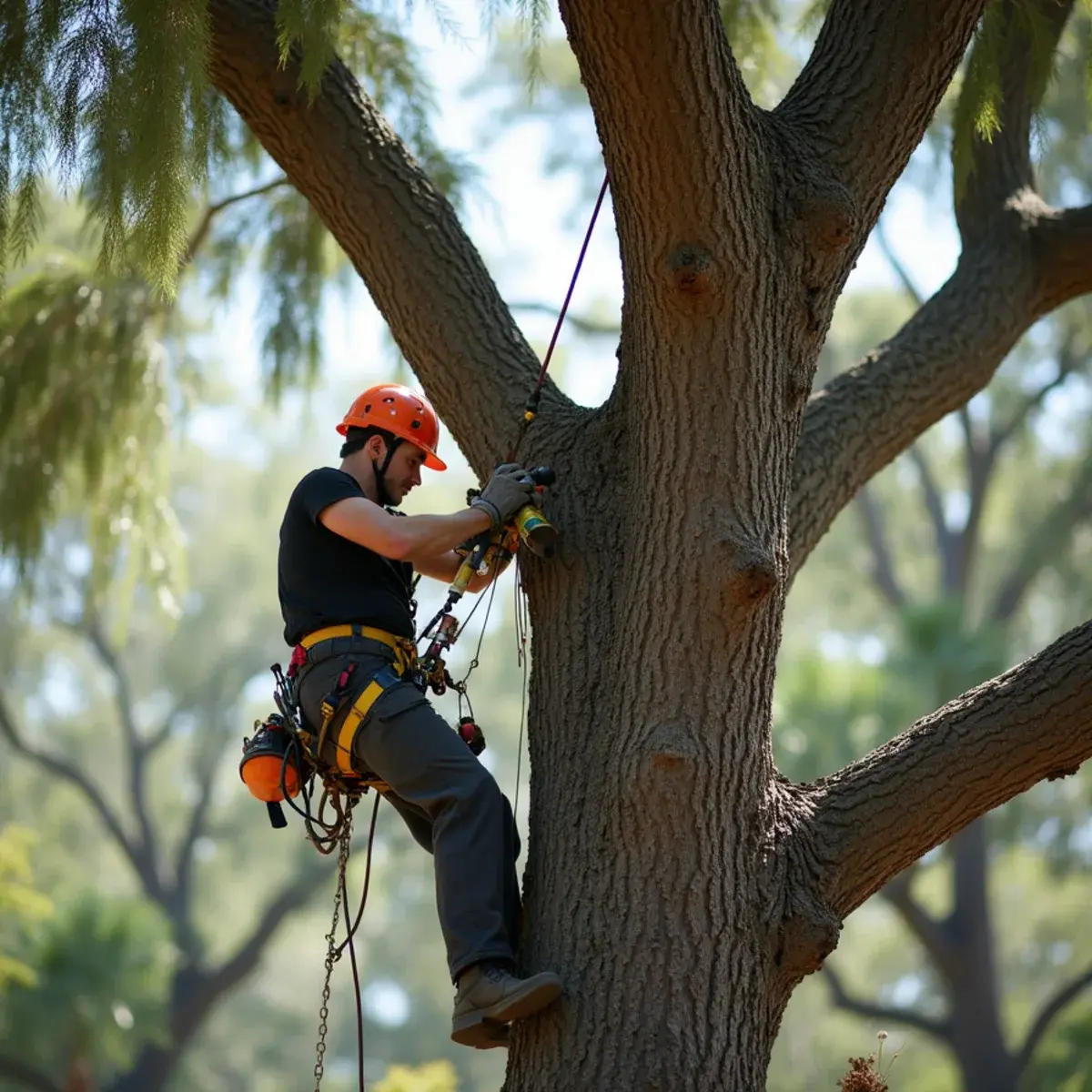
Bracing is hardware through the wood. Threaded steel rods installed through or just above a union physically hold the two halves together. Bracing is what you use when a union has already cracked, and it is almost always paired with a cable above it — the rod resists the split, the cable takes the dynamic load off it.
The other tool is simply pruning. Often the right answer is to reduce the length of the over-extended limb so the union no longer has too much leverage on it, with no hardware at all. We will always tell you when that is the cheaper and better fix.
Static steel vs. dynamic synthetic systems
Traditional static systems use extra-high-strength steel cable with lag or through-bolt anchors. They are strong, proven, and appropriate where a union has already failed or where movement genuinely needs to be limited. The tradeoff is that a rigid system removes the movement that stimulates a tree to grow reaction wood, so the tree becomes dependent on the hardware.
Dynamic systems use hollow-braid synthetic rope with a shock-absorbing section, installed as a non-invasive collar around the limbs rather than bolted through them. They allow normal sway while catching extreme movement, so the tree keeps building its own strength. We prefer them for preventive installations on healthy unions.
Which one goes in your tree depends on the defect, the species, and whether the failure has already started. There is no universally correct answer, and any company that only installs one type is choosing hardware before diagnosis.
Installation, and the part most people skip
We install to ANSI A300 Part 3, the industry standard for supplemental support systems. That covers cable placement height, anchor type and depth, hardware sizing to the limb diameter, and the number of cables required for the geometry of the tree — a three-stem oak may need a triangular arrangement rather than a single cable.
The part homeowners are never told about is inspection. A support system is not fire-and-forget. Trees grow, cables can go slack or bite into expanding wood, anchors can be engulfed, and synthetic rope degrades under Florida UV exposure. Systems should be looked at annually and hardware replaced on a cycle.
We build that into our installs. Every cabling job comes with an annual inspection, and we keep a record of what went in, where, and when — so five years from now nobody has to guess what is buried in that union.
When cabling is the wrong answer
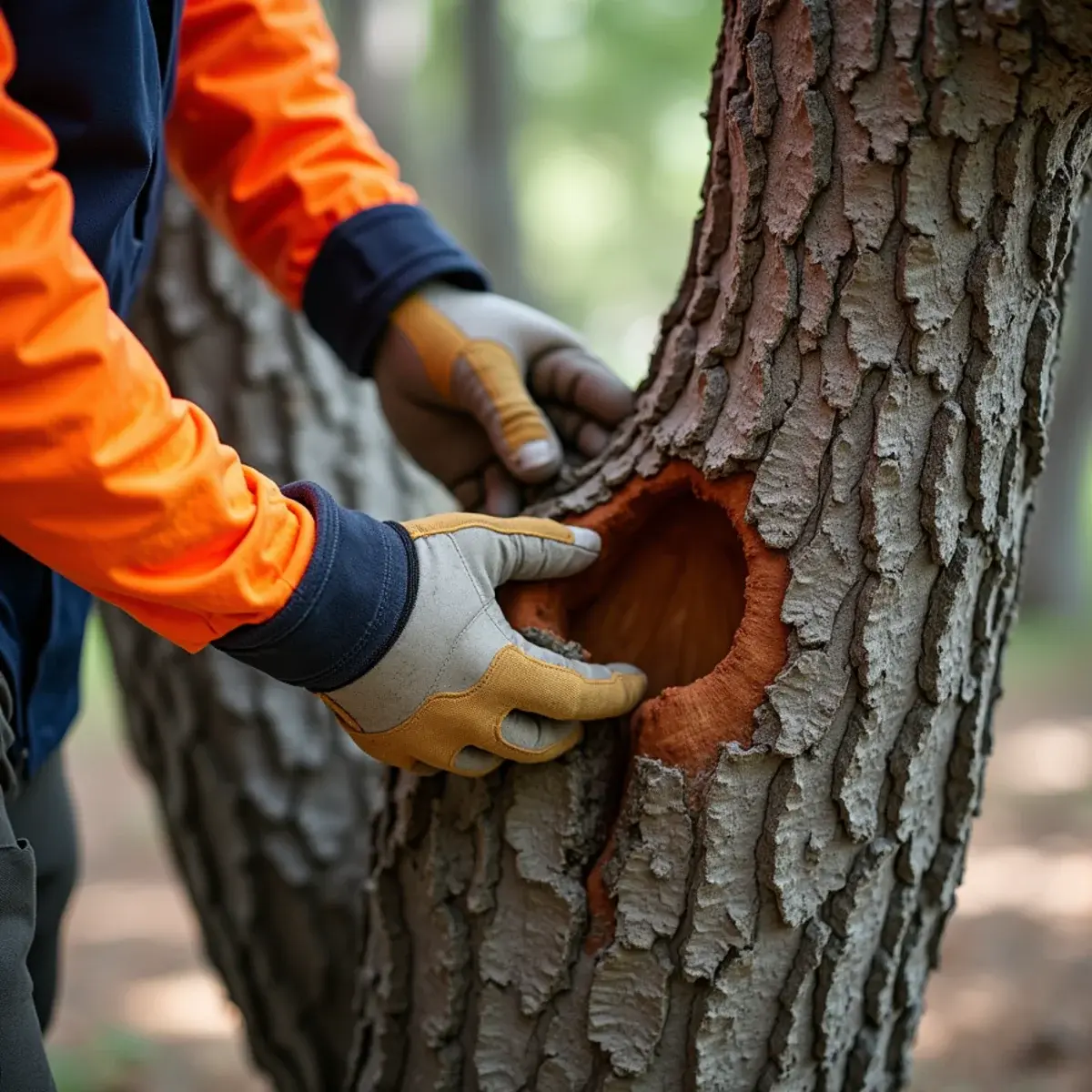
A support system does not fix decay. If the wood at the union is rotten, there is nothing sound for hardware to hold, and installing a bolt through decayed wood gives an owner false confidence about a tree that is still going to fail.
It also does not fix a root problem. A tree with a compromised root plate will go over as a whole tree, and no amount of cabling in the canopy addresses that.
And it is not cost-free forever. Between installation and the inspection cycle, supporting a marginal tree over a house can eventually cost more than removing and replanting. For a specimen live oak, that is easily worth it. For a 40-year-old laurel oak that is already hollowing, it usually is not, and we will say so.
How cabling & bracing works, step by step
Why choose Have Faith Trees for cabling & bracing
A live oak is not replaceable in your lifetime
We install both system types
Inspection is built in, not sold later
We will tell you when it is not worth it
What affects the price
Cabling & Bracing questions we get asked
Related tree services
Further reading
Book cabling & bracing in St. Augustine
Free on-site estimate, written price before we start, and full cleanup included. Same-day response for genuine hazards.
- 47 five-star reviews
- Licensed & insured
- 24/7 storm response