Have Faith Trees — tree service in St. Augustine, FL
Tree removal crew lowering a large oak limb over a St. Augustine, FL backyard

St. Augustine, FL

Tree Removal in St. Augustine, FL

Not every tree needs to come down. That is the first thing Robert will tell you when he walks your property. But when a tree is dead, hollow, leaning over the house, or dropping limbs every time the wind picks up, removal is the honest answer — and the safest one.

  • Free on-site estimate
  • Permit paperwork handled
  • Full debris haul-away
  • Fully insured crews

Short answer

Tree removal in St. Augustine runs from a few hundred dollars for a small palm to several thousand for a mature oak that has to be climbed and rigged over a roof — access and proximity to structures drive the number far more than height does. Have Faith Trees takes down hazardous, dead and crowding trees across St. Johns County, files the permit where your parcel needs one, and hauls every piece of it away. Free on-site estimate, written price before anything starts.

Have Faith Trees removes trees across St. Augustine, from the tight historic lots downtown to the pine-heavy acreage out past State Road 207. We rig and lower sections rather than free-dropping them, so a 70-foot laurel oak six feet from your roofline comes down in pieces you can carry, not in one gamble.

Signs a tree on your property needs to come out

  • Large dead limbs in the upper canopy, or a canopy that leafed out thin and patchy this spring
  • Mushrooms, conks, or shelf fungus growing from the trunk flare or exposed roots — usually a sign of internal decay
  • A fresh lean after a storm, especially with cracked or heaved soil on the opposite side of the trunk
  • A hollow, punky trunk that sounds drum-like when tapped, or a cavity you can put your hand into
  • Deep bark cracks, seams, or a co-dominant fork that is visibly splitting apart
  • Roots severed by a driveway pour, pool dig, septic line, or new addition within the last few years
  • Constant limb drop on the driveway, roof, or fence after every thunderstorm

What’s included with tree removal

Every line below is part of the quoted price. No hidden fees, and nothing discovered halfway through the job.

  • A free on-site estimate with a written, itemized price before anything starts
  • Drop-zone survey — irrigation heads, septic drain fields, pavers, fence lines and service drops located before a saw runs
  • Permit application filed and the tree’s condition photographed and documented where your parcel requires it
  • Rigged sectional removal over anything breakable, or a directional fell where there is genuinely room for one
  • Brush chipped and hauled, wood removed — or cut to firewood length and stacked for you at no charge
  • Work area raked, equipment ruts repaired, driveway and walkways blown clean
  • A walk-through with you before we load out

Typical timeline

Most single-tree removals are a one-day job. Larger properties get scheduled across consecutive days so your driveway is never blocked overnight. Routine work is usually booked within the week; genuine hazards same day where we can.

Quoted separately

  • Stump grinding — quoted separately, and cheapest done in the same visit
  • Replacement planting where a permit requires mitigation — quoted once the county sets the requirement

Free estimate for tree removal in St. Augustine

Call +1 (208) 635-2100 and describe the tree, or send the form below and we will get back to you the same day.

  • 47 five-star reviews
  • Licensed & insured
  • 24/7 storm response

Tree Removal on the job in St. Augustine
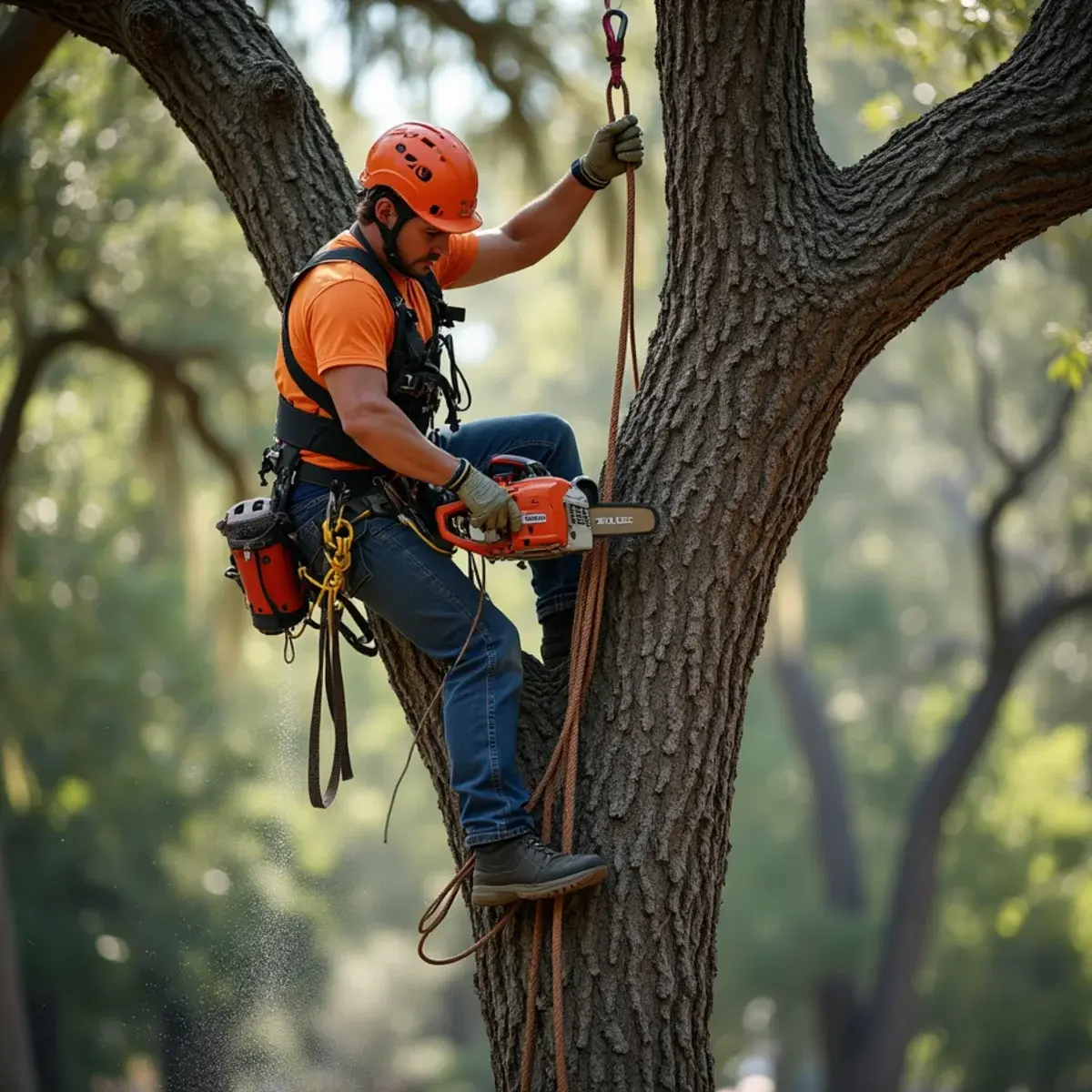
Real work, photographed on St. Johns County properties.

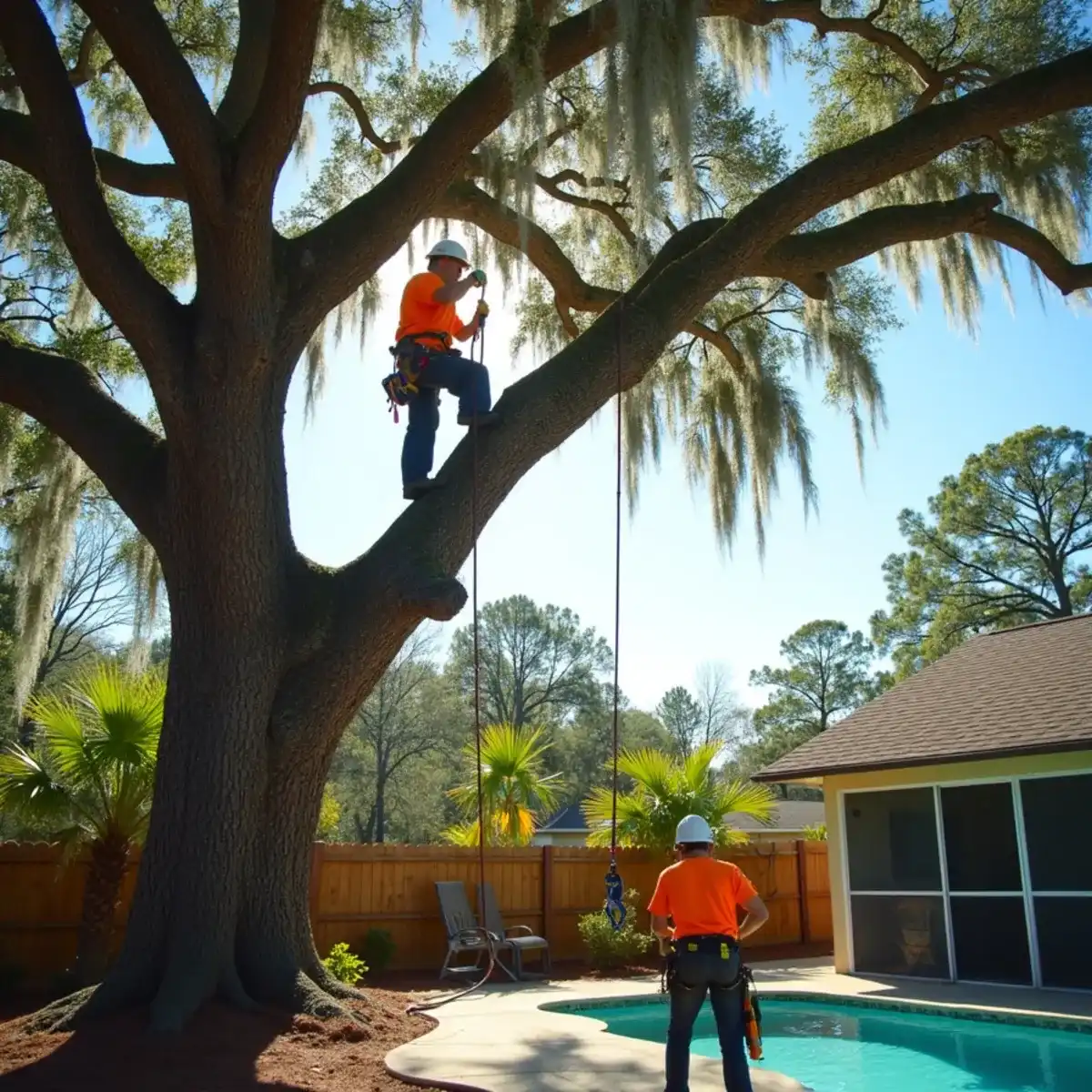
  • Climber rigging oak section, tree removal in St. Augustine, FL
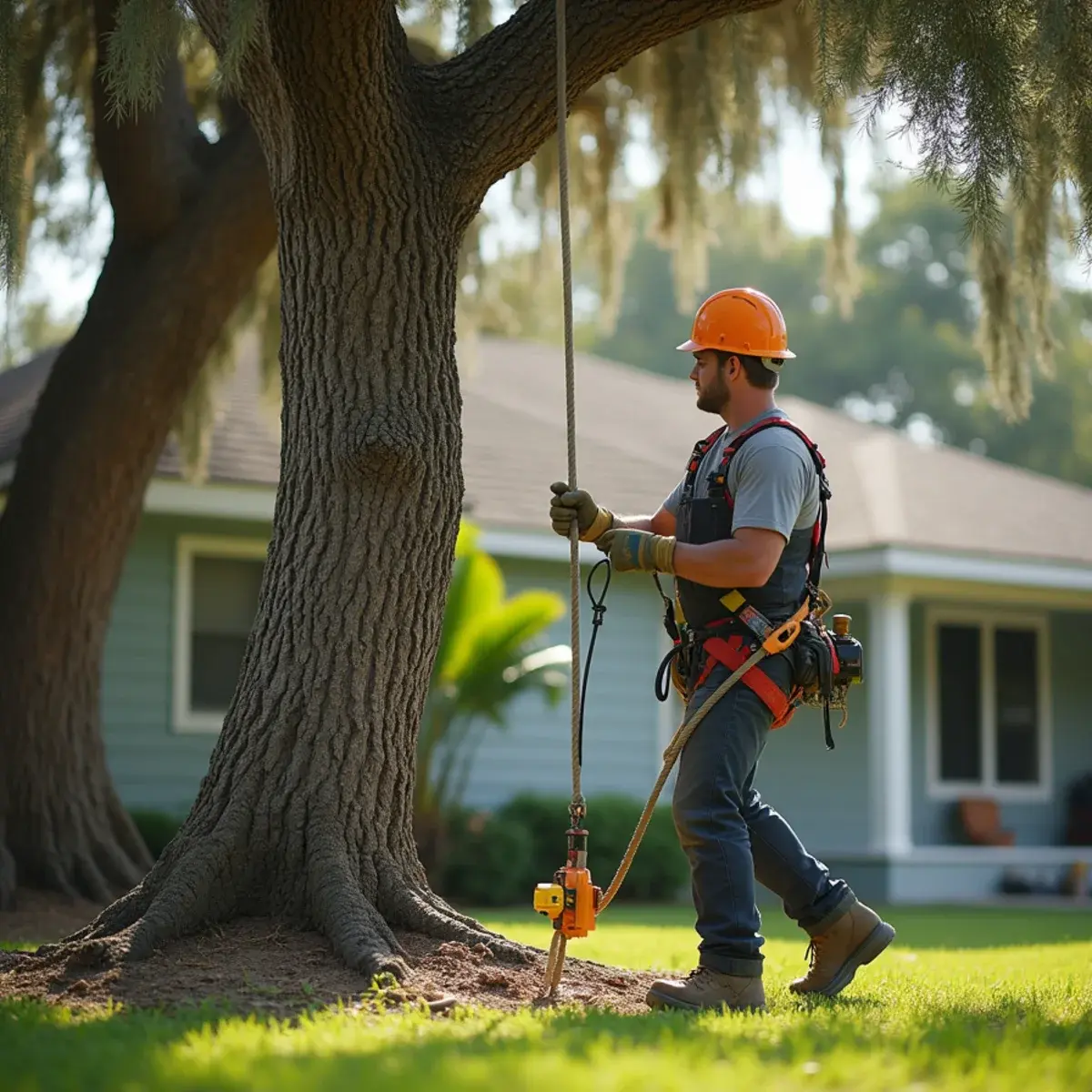
  • Groundsman lowering limb, tree removal in St. Augustine, FL
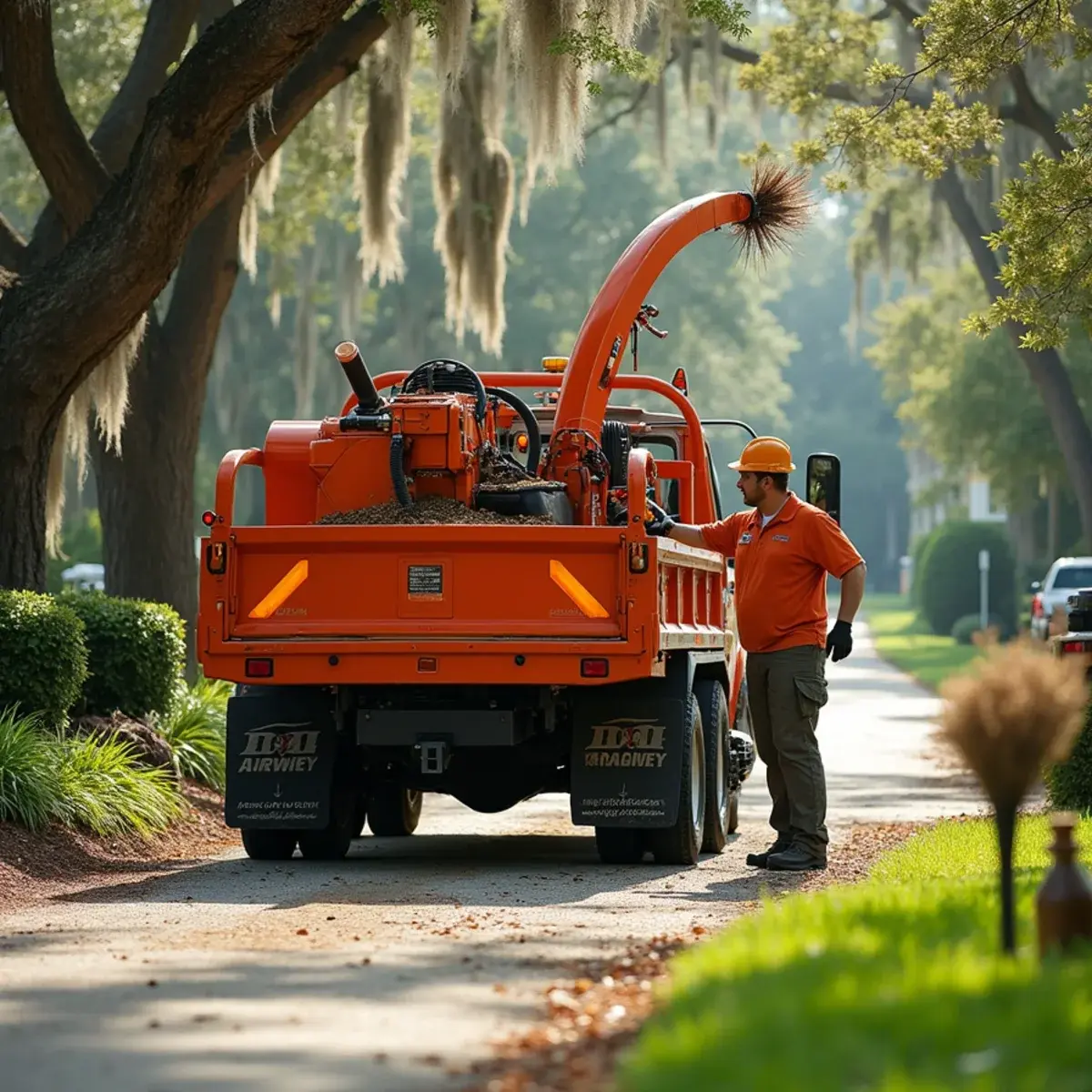
  • Chipper and cleanup, tree removal in St. Augustine, FL

How we take a tree down without tearing up your yard

Every removal starts with the drop zone. Before a saw runs, we look at what is under and around the tree: irrigation heads, septic drain fields, pavers, fence lines, screen enclosures, and the neighbor’s roof. That survey decides whether the tree gets felled whole, sectioned from a climbing line, or lowered piece by piece on rigging.

On open lots with room to work, a directional fell is fastest and cheapest — a proper face notch, a back cut with a hinge, and the tree lays down exactly where we planned it. On tight St. Augustine lots, that is rarely an option. There we climb, set a rigging point above the cut, and lower each limb under control. It takes longer and costs more, and it is why a 60-foot oak in an open pasture and the same oak wedged between two houses are two very different jobs.

Once the wood is on the ground, we buck it into manageable rounds, chip the brush, and rake the work area. Ruts get raked out, chips get blown off the driveway and walkways. Half of the reviews we get mention the clean-up, and that is not an accident — a job is not finished until the yard looks like we were never there.

Removals we handle every week in St. Johns County

Northeast Florida throws a specific mix of removal work at us, and after years on these lots we know how each species behaves on the way down.

  • Laurel oak — fast-growing, short-lived, and the single most common hazard tree we take out here. Most start hollowing at 40 to 50 years, right about the age of the trees planted across St. Augustine South and Lincolnville subdivisions.
  • Water oak — same story as laurel oak, with a habit of shedding big limbs with no warning in summer storms.
  • Slash and longleaf pine — tall, brittle at the top, and the trees most likely to snap mid-trunk in a tropical system. Common through World Golf Village and the 207 corridor.
  • Sabal and Washingtonia palms — usually removed for ganoderma butt rot, storm damage, or because they were planted three feet from a foundation twenty years ago.
  • Southern magnolia and camphor — heavy, dense wood that has to be rigged carefully; camphor is also invasive and often removed on purpose.
  • Storm-damaged pines and oaks hung up in other trees, which are among the most dangerous removals there are and never a DIY job.

Permits, protected trees, and the paperwork we handle

St. Augustine and St. Johns County both regulate tree removal, and the rules differ depending on whether your address is inside city limits, in the county, or inside a CDD community like Nocatee. In general, trees above a certain trunk diameter require a permit, and some removals trigger a replacement-planting requirement.

Dead, diseased, and imminently hazardous trees are usually treated differently than healthy ones, but "usually" is not something you want to bet a fine on. We pull the permit, document the tree’s condition with photos, and handle the submission as part of the job — you do not chase county paperwork on your own time.

If a permit is going to be denied, we will tell you that at the estimate rather than after we have your deposit. Sometimes the right answer is a heavy reduction and a cabling system instead of a removal, and we would rather send you down that road than sell you work the county will not approve.

What happens to the wood

Standard removals include hauling everything away. If you want the wood, say so at the estimate — we will cut it to firewood length and stack it, at no charge, because it saves us the haul. Brush becomes chips, and if you want those chips left for mulch beds, we will dump them where you want them instead of loading them out.

Stumps are quoted separately because not everyone wants one ground. If you plan to replant, re-sod, or put anything on that spot, grinding it out is the right call — you can bundle it with the removal or read more on our stump grinding service page first.

How tree removal works, step by step

The same sequence on every job, so you know what is happening and when.

  1. 01Free on-site estimateRobert walks the property with you, checks what is under and around the tree — irrigation, septic, pavers, fence lines, the neighbor's roof — and gives you a written, itemized price before he leaves.
  2. 02Permit filed and condition documentedIf your parcel sits above the regulated diameter we measure the trunk at 4.5 feet, photograph the defects, write the arborist justification and submit the application. You never touch a county form.
  3. 03Drop zone prepped and protectedUtility locate called in, mats laid where the ground is soft, and the work zone cleared. This is the step that decides whether your lawn survives the day.
  4. 04Rigged sectional takedownOn a tight lot the tree is climbed, a rigging point is set above each cut, and every section comes down under control on a rope. Open lots get a directional fell, which is faster and cheaper.
  5. 05Cleanup and walk-throughBrush chipped, wood hauled or cut to firewood length and stacked, ruts raked out, driveway and walkways blown clean. Then we walk it with you before we load out.

Why choose Have Faith Trees for tree removal

8+ years on Northeast Florida trees, 47 five-star Google reviews, licensed and fully insured — and these four things specific to this job.

  • Removal is the last recommendation, not the first

    Plenty of the trees we are called to take down need pruning or a support cable instead, and you will hear that before you hear a removal price.

  • Rigged, not dropped

    On a lot with a house six feet away, the difference between a clean job and a hole in your roof is whether the crew rigs every section or gambles on a drop.

  • Permits handled as part of the job

    St. Augustine city limits, unincorporated St. Johns County and CDD communities all run different rules. We check the parcel before quoting.

  • Licensed and fully insured

    General liability and workers' compensation, certificate issued by our carrier on request before any crew arrives.

What affects the price

We do not publish flat prices, because an honest tree quote depends on the specific tree in front of us. These are the factors we are weighing when we walk your property.

Height and trunk diameter
A 30-foot pine and an 80-foot oak are different machines, different crews, and different days.
Access to the drop zone
Backyard trees behind a locked gate, a pool cage, or a septic field cost more than a front-yard tree with driveway access.
Proximity to structures and power
Anything requiring climbing and rigging over a roof, pool, or service drop takes far longer than an open fell.
Tree condition
Dead and decayed trees are more dangerous to climb and often need to be taken from a bucket or crane, which raises cost.
Debris volume and haul distance
A dense live oak makes several times the debris of a slender palm of the same height.
Permit requirements
Protected species or regulated-diameter trees add application time and, occasionally, a replacement planting.
Stump grinding
Priced by stump diameter and root flare; bundling it with the removal is cheaper than a separate trip.

Tree Removal questions we get asked

How much does tree removal cost in St. Augustine?
Every quote is based on the specific tree, but the honest range in St. Johns County runs from a few hundred dollars for a small palm or backyard sapling to several thousand for a mature oak that has to be climbed and rigged over a house. Height, access, proximity to structures, and debris volume drive the number. We give free, written, on-site estimates — no phone guesses, because phone guesses are how people get surprised.
Do I need a permit to remove a tree in St. Augustine?
Often, yes. Both the City of St. Augustine and St. Johns County regulate removal of trees above certain trunk diameters, and protected species have stricter rules. Dead or hazardous trees are typically handled differently. We check your specific address and handle the permit application as part of the job.
Will you damage my lawn or driveway?
We plan around it. Plywood or mats go under equipment when the ground is soft, drop zones are chosen to protect irrigation and pavers, and heavy sections get lowered instead of dropped. Small ruts can happen on saturated ground, and we rake and repair them before we leave.
How soon can you remove a dangerous tree?
For an actively hazardous tree — one leaning on a structure, uprooted, or hung up after a storm — call us and we will get out same day when we can. Routine removals are usually scheduled within a week, weather permitting.
Do you remove the stump too?
We can, and it is cheaper to do it in the same visit. Stump grinding is quoted separately since some customers want the stump left for a seat or a planter. We grind six to twelve inches below grade so you can re-sod or replant.

Related tree services

Further reading

Tree Removal across Northeast Florida

We run tree removal jobs throughout St. Johns County and the surrounding coast. Pick your city for local tree notes and conditions.

Book tree removal in St. Augustine

Free on-site estimate, written price before we start, and full cleanup included. Same-day response for genuine hazards.

  • 47 five-star reviews
  • Licensed & insured
  • 24/7 storm response
Call NowFree Quote

47 five-star reviews · Licensed & insured · Free estimates