Short answer
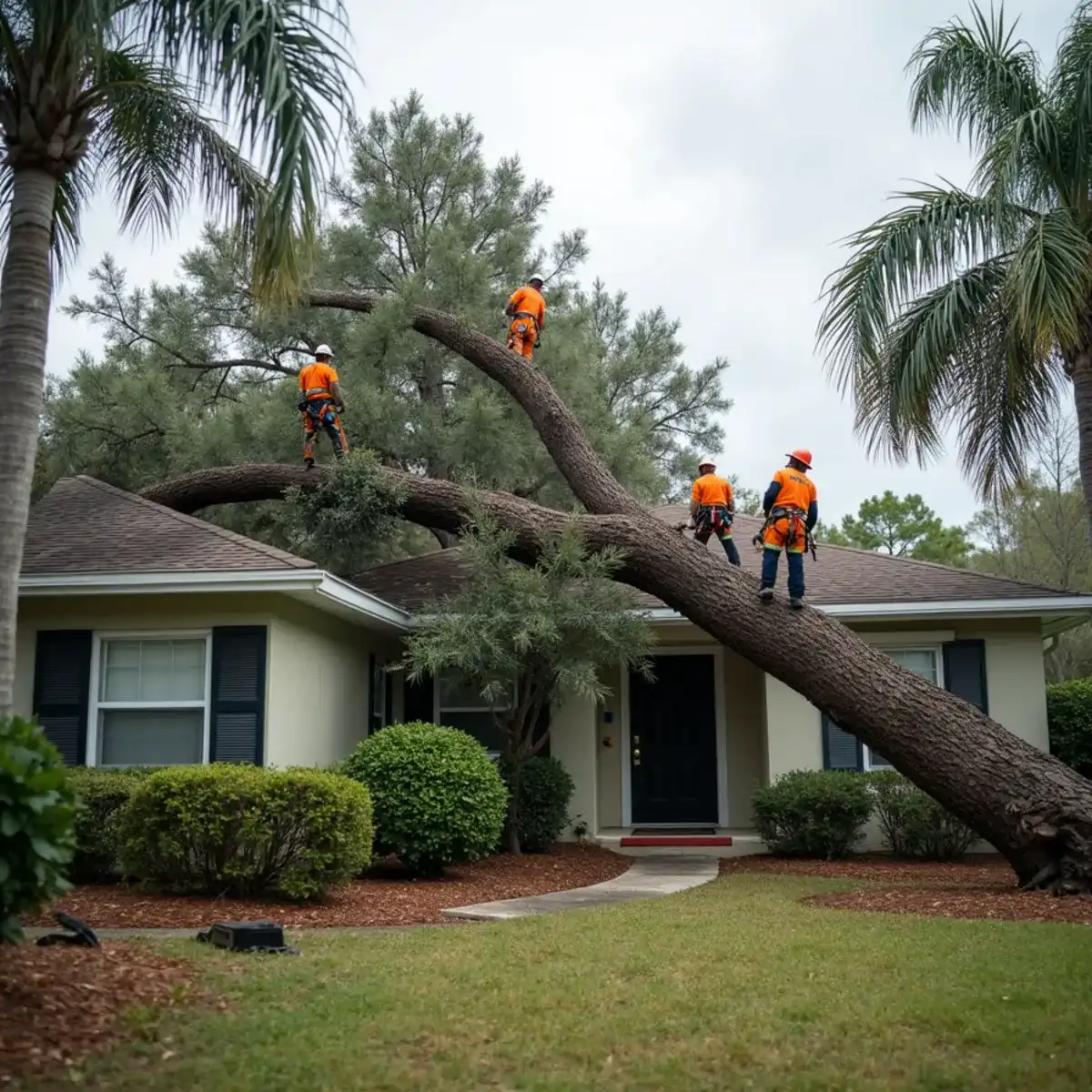
It is one of the worst calls we take, and it comes at the worst times — usually at night, usually in the rain. If it has just happened to you, work through this in order.
Everything below assumes nobody is injured. If anyone is hurt or trapped, call 911 first and stop reading.
1. Get everyone out of the affected area
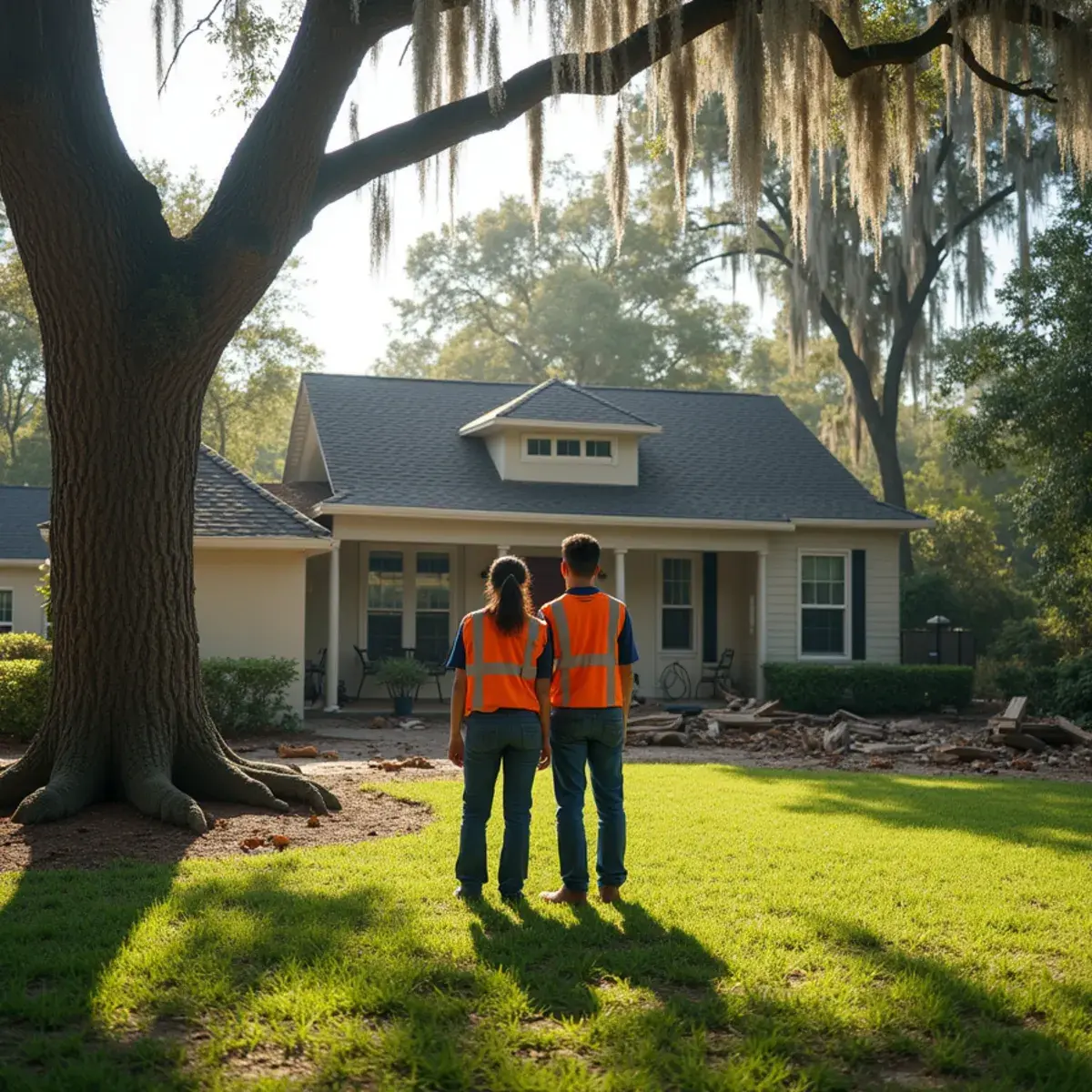
Leave the part of the house the tree hit, and do not go back in for belongings. A tree resting on a roof is not stable — it is held by whatever it happened to catch on, and it can shift as the structure settles or the wind picks up.
If the tree has damaged the roof structure or you can see ceiling sag, leave the house entirely. Structural damage is not always obvious from inside.
2. Deal with utilities before anything else
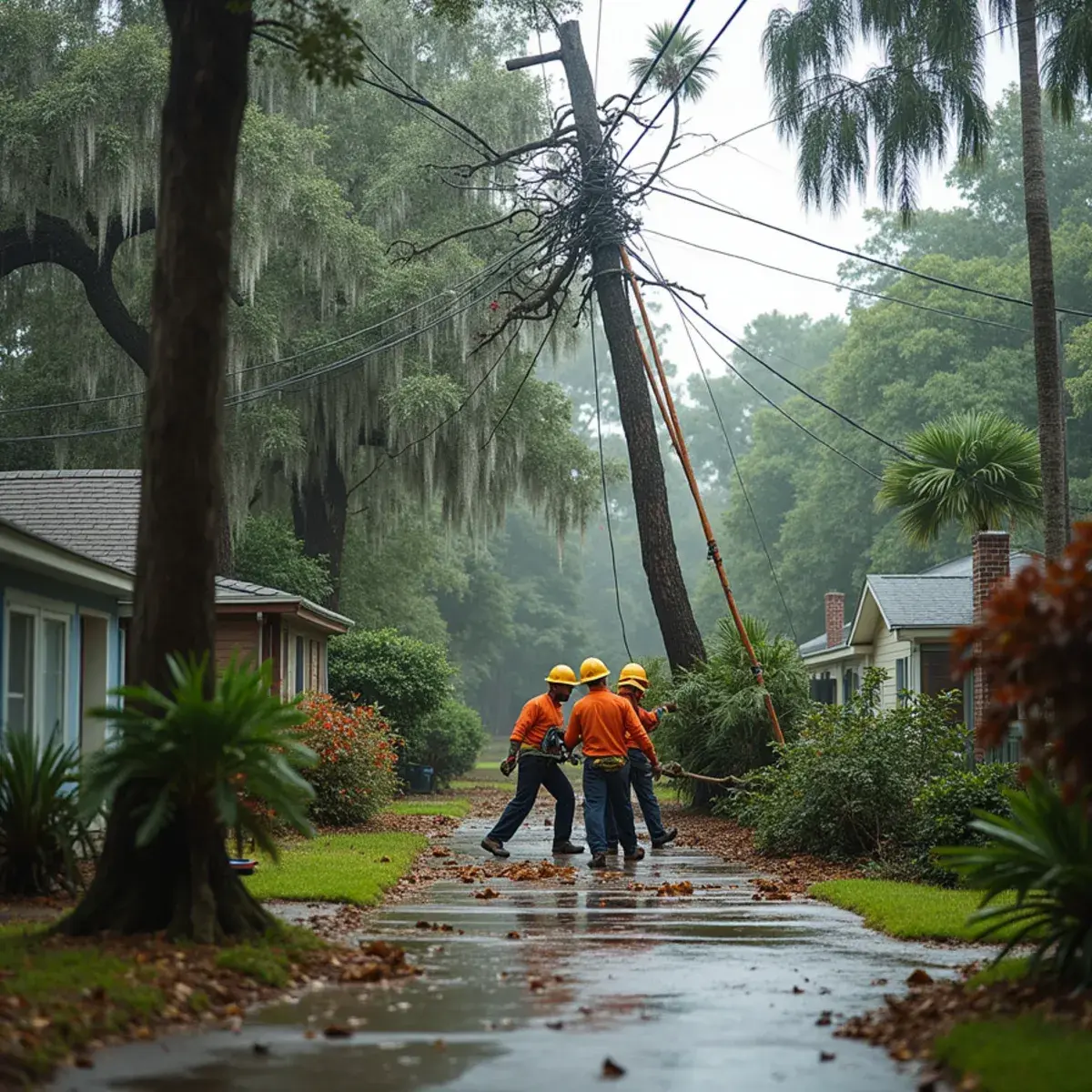
If the tree is touching power lines, or if lines are down anywhere near it, treat the entire area as energized. Stay well back — at least 30 feet — and call the utility. In our area that is FPL or JEA. No tree company can legally or safely work around energized primary conductors.
If you smell gas, get out and call the gas utility from a distance.
If water is coming in and you can safely reach the breaker panel, cutting power to the affected area reduces electrical risk. If reaching it means walking through water or the damaged zone, do not.
3. Photograph everything before anything moves
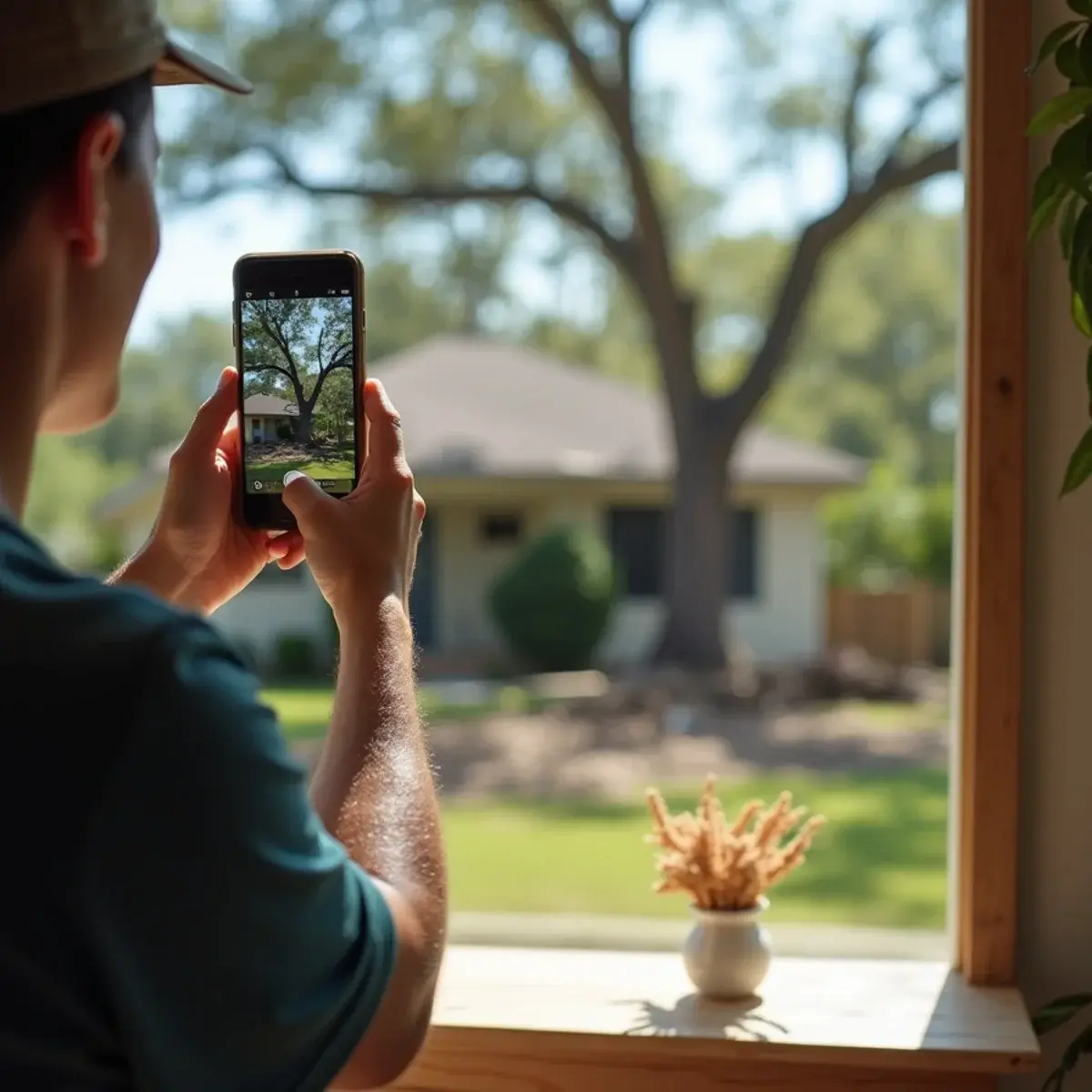
This is the step people skip and regret. Once the tree is off the house, the evidence of what happened is gone, and adjusters work from evidence.
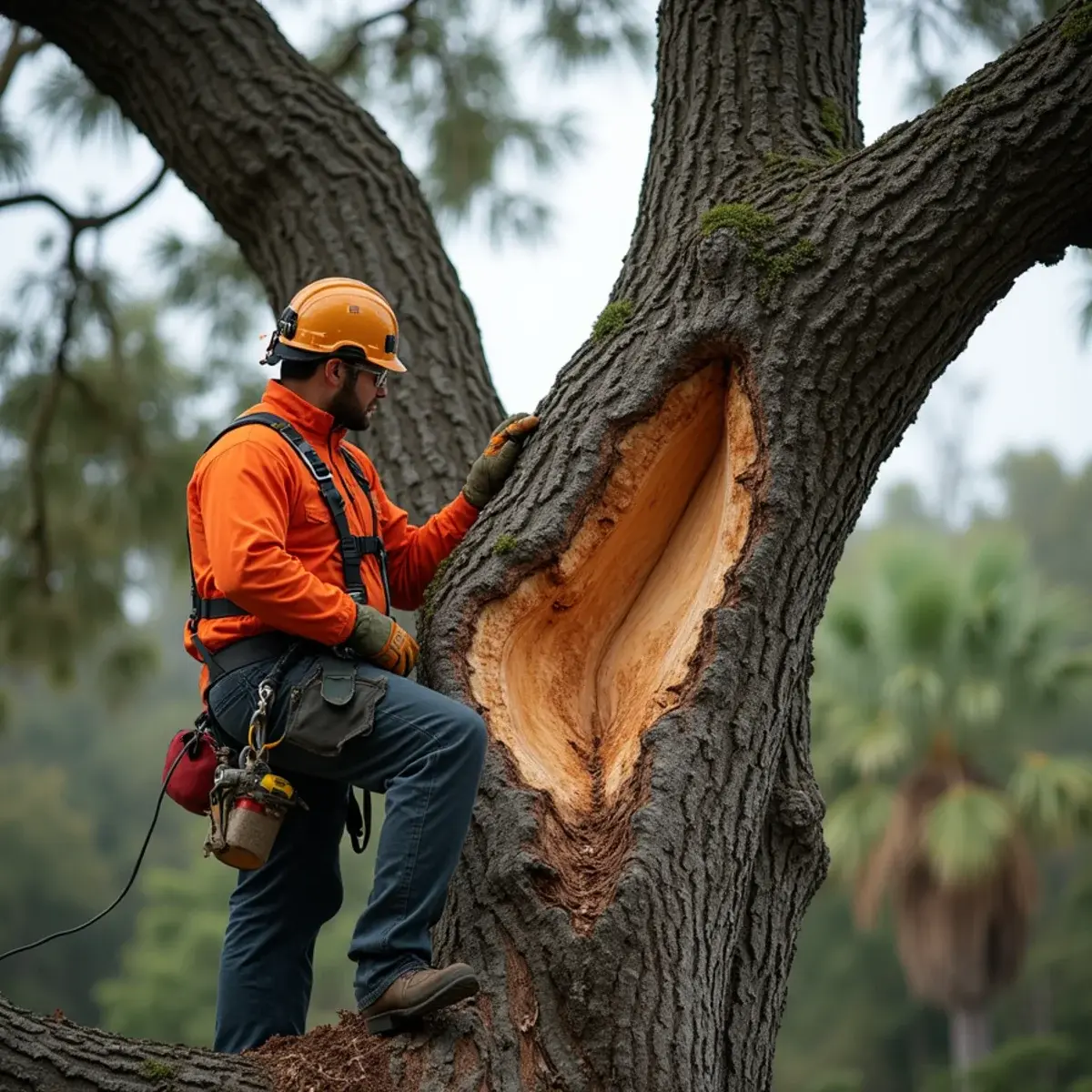
Photograph from multiple angles and distances: the whole scene showing the tree and the house together, the point of failure on the tree — the broken trunk, the uprooted root plate, the torn union — the damage to the structure, and any interior damage including water intrusion. Take video walking the scene. Note the date and time.
Our crews document every emergency job for this exact reason, and those photos go to the homeowner the same day.
4. Call your insurance carrier and an emergency tree service
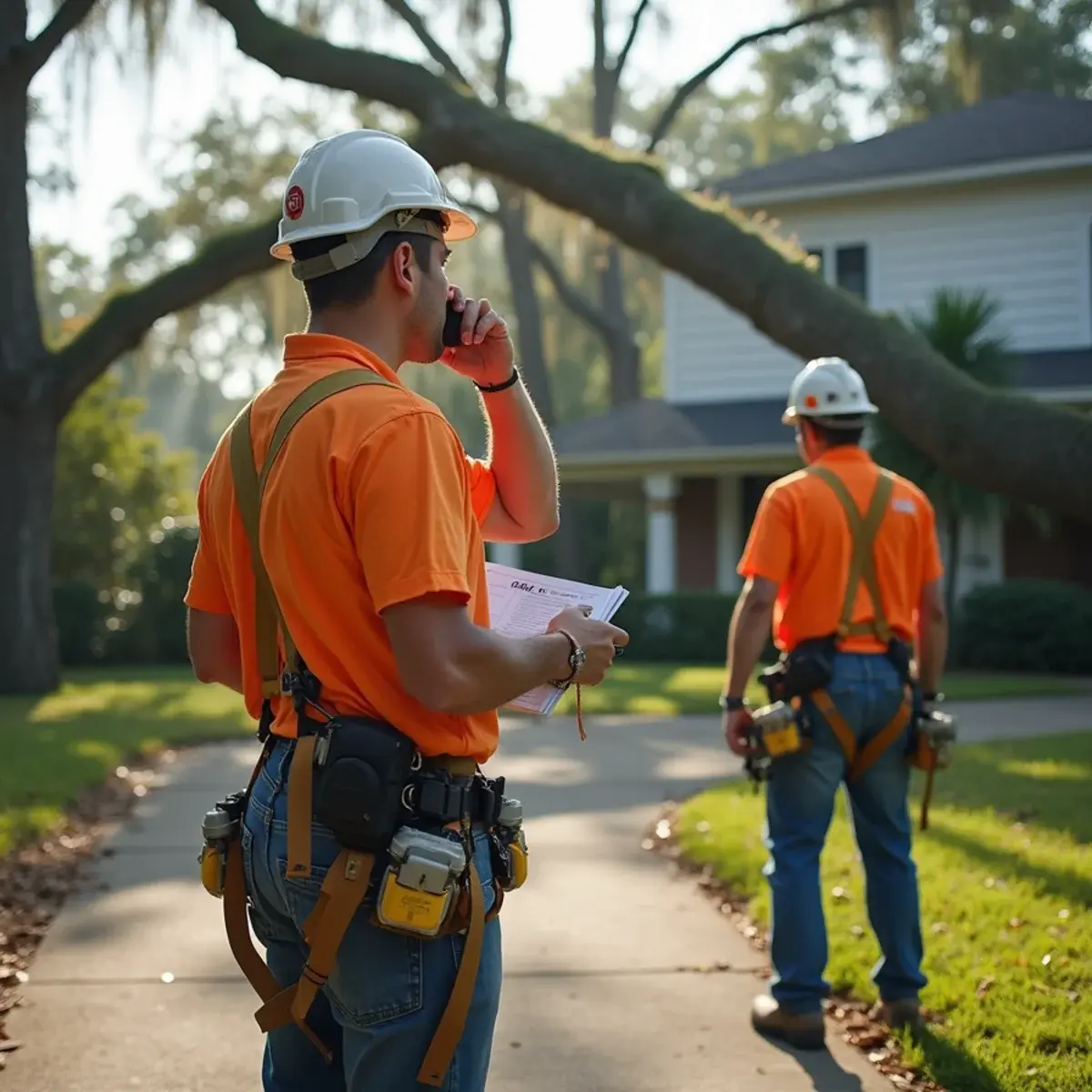
Open the claim promptly. Most Florida homeowners policies cover tree removal when the tree damages a covered structure — the house, a garage, a fence, and depending on the policy a screen enclosure. A tree that falls in the open yard and hits nothing is usually the homeowner’s expense, sometimes with a limited debris allowance.
You do not need to wait for the adjuster to authorize emergency work. Policies generally require you to take reasonable steps to prevent further damage — that is what tarping and make-safe work is. Keep the emergency work itemized separately from the full removal on the invoice, because they are often handled differently by the carrier.
Our emergency tree service runs 24/7 during storm events across St. Johns and Flagler counties, and we provide the written scope and photographs adjusters ask for.
5. Do not cut it yourself
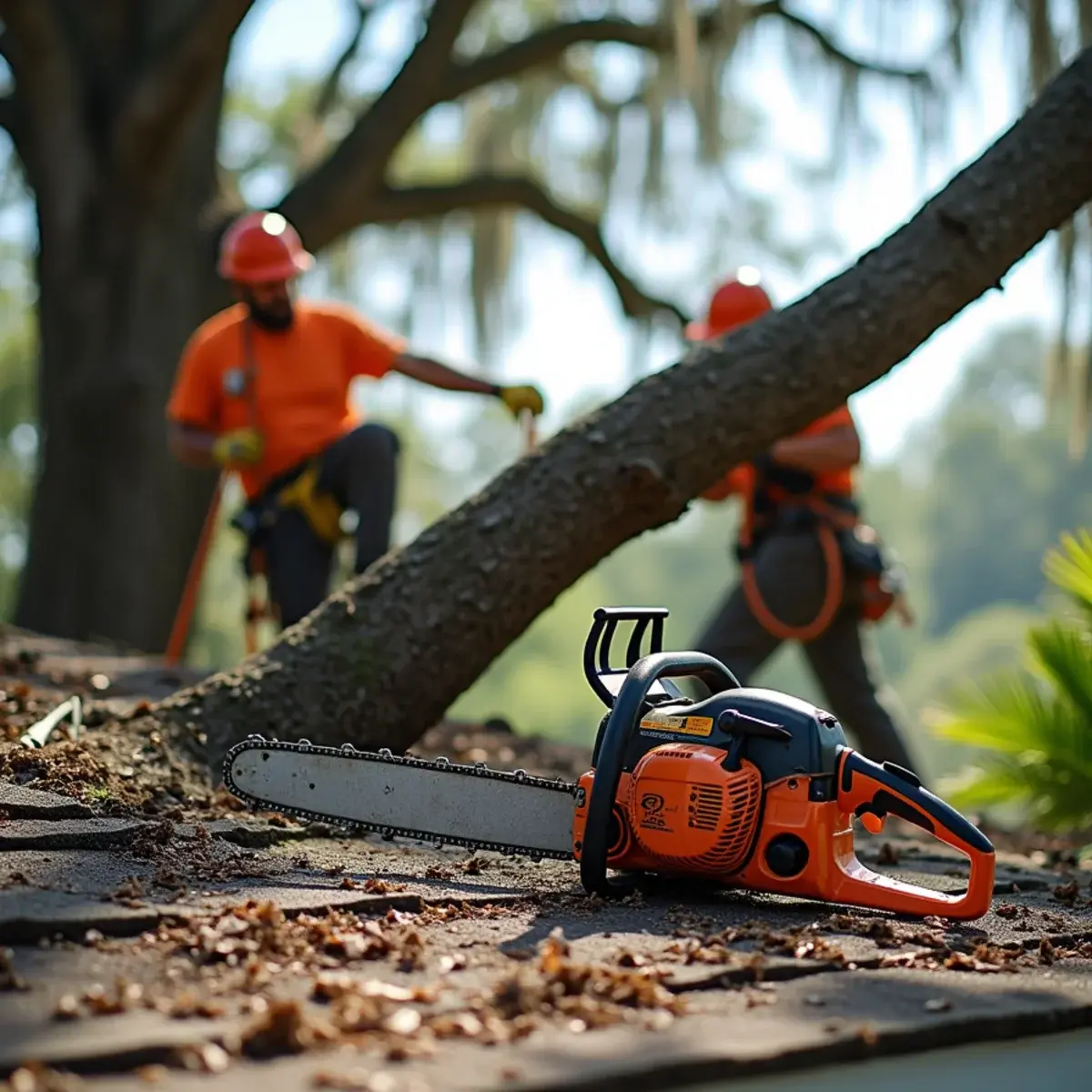
This is where people get badly hurt. A tree resting on a structure is under tension and compression in ways that are not visible from the ground. Cut it in the wrong place and the load releases — the trunk rolls, the limb springs, or the whole mass drops through the roof it was resting on.
Chainsaw injuries spike after every storm in Florida, and the majority are homeowners doing exactly this. The tree is not going anywhere in the next two hours. Wait for a crew with rigging and, where needed, a crane.
6. What the crew actually does
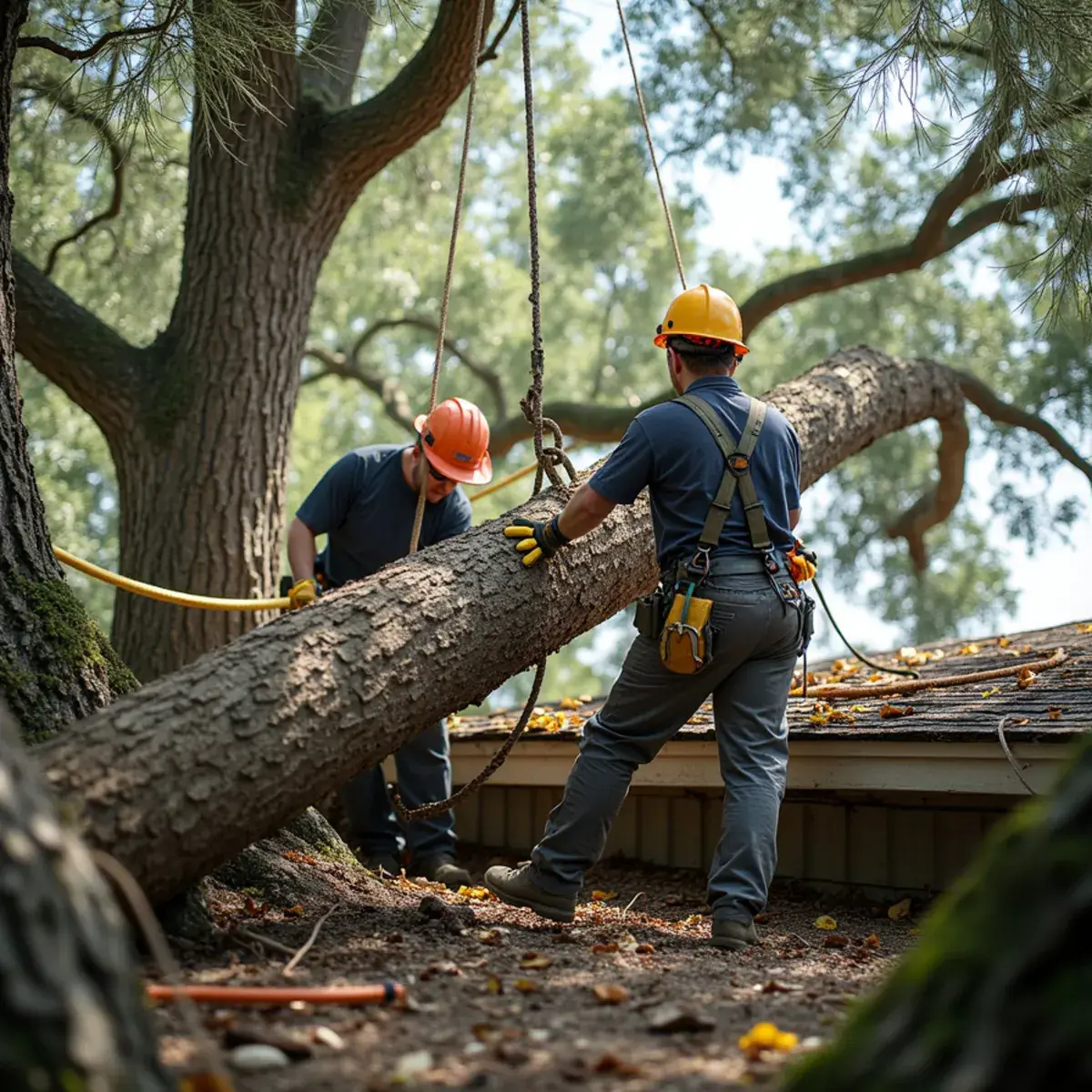
It is worth knowing what you are paying for. The work is not "cut up the tree."
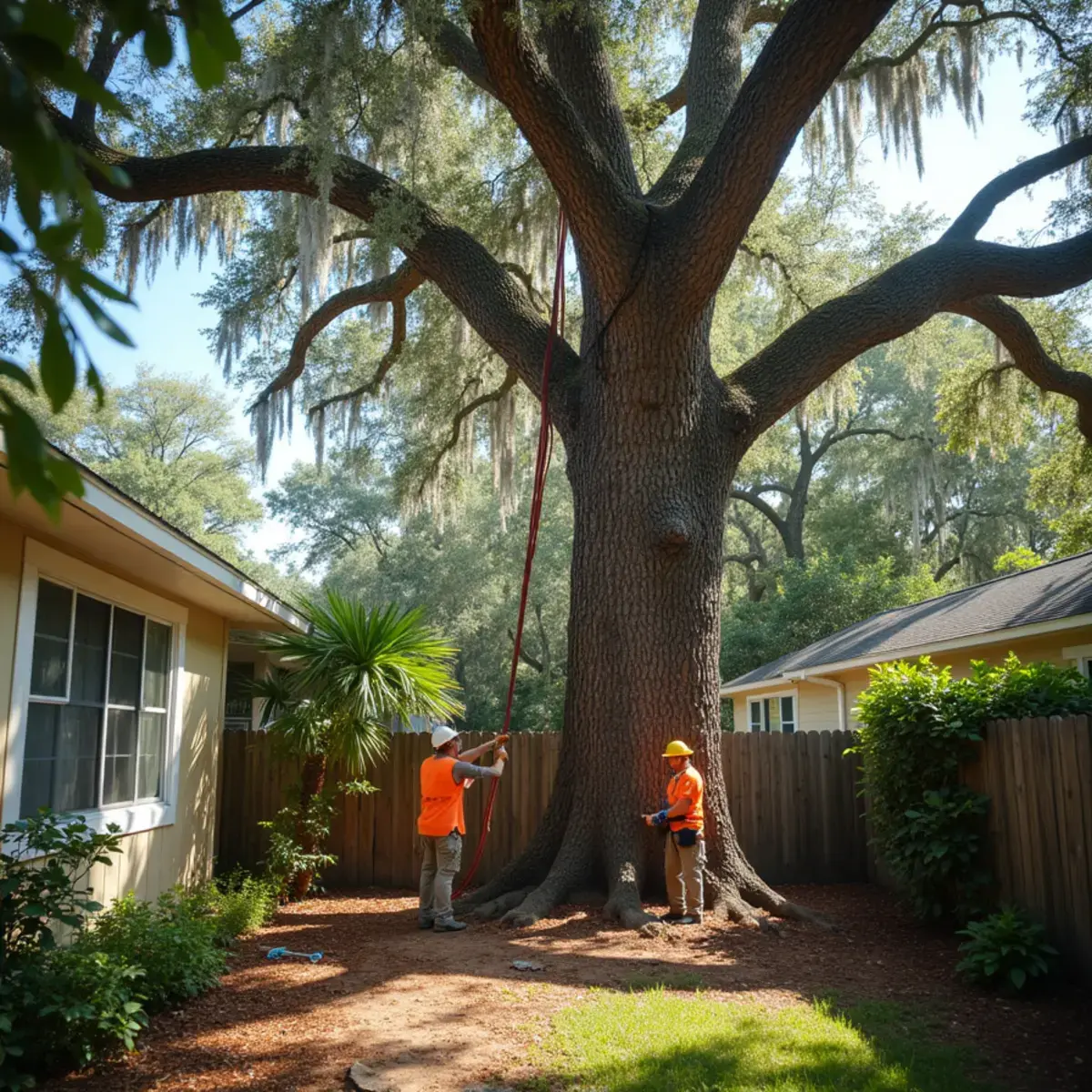
First, make the site safe: establish a work zone, confirm no energized lines, and assess where the load is bearing. Then relieve the load from the top down in sections, supporting or lifting anything sitting on the structure rather than letting it drop. Then remove the trunk and root plate. Then tarp and make safe so the building is dry.
Full debris cleanup usually follows as a separate phase, particularly during a widespread event when disposal sites are backed up.
Who pays when it is the neighbor’s tree
This comes up constantly and the answer surprises people. In Florida, when a neighbor’s tree falls on your house due to a storm, it is generally your own insurance that handles it — an act of nature is nobody’s fault.
The picture changes if the tree was demonstrably hazardous and the neighbor was on notice. If you had told them in writing that the tree was dead or dangerous, negligence becomes arguable, and that written notice is what makes the difference.
The practical takeaway: if a neighbor’s tree genuinely worries you, put your concern in writing and keep a copy. It is uncomfortable and it is far cheaper than the alternative.
Frequently asked questions
The bottom line
Work the order: people out, utilities checked, photographs taken, calls made, and let a crew with the right equipment handle the tree.
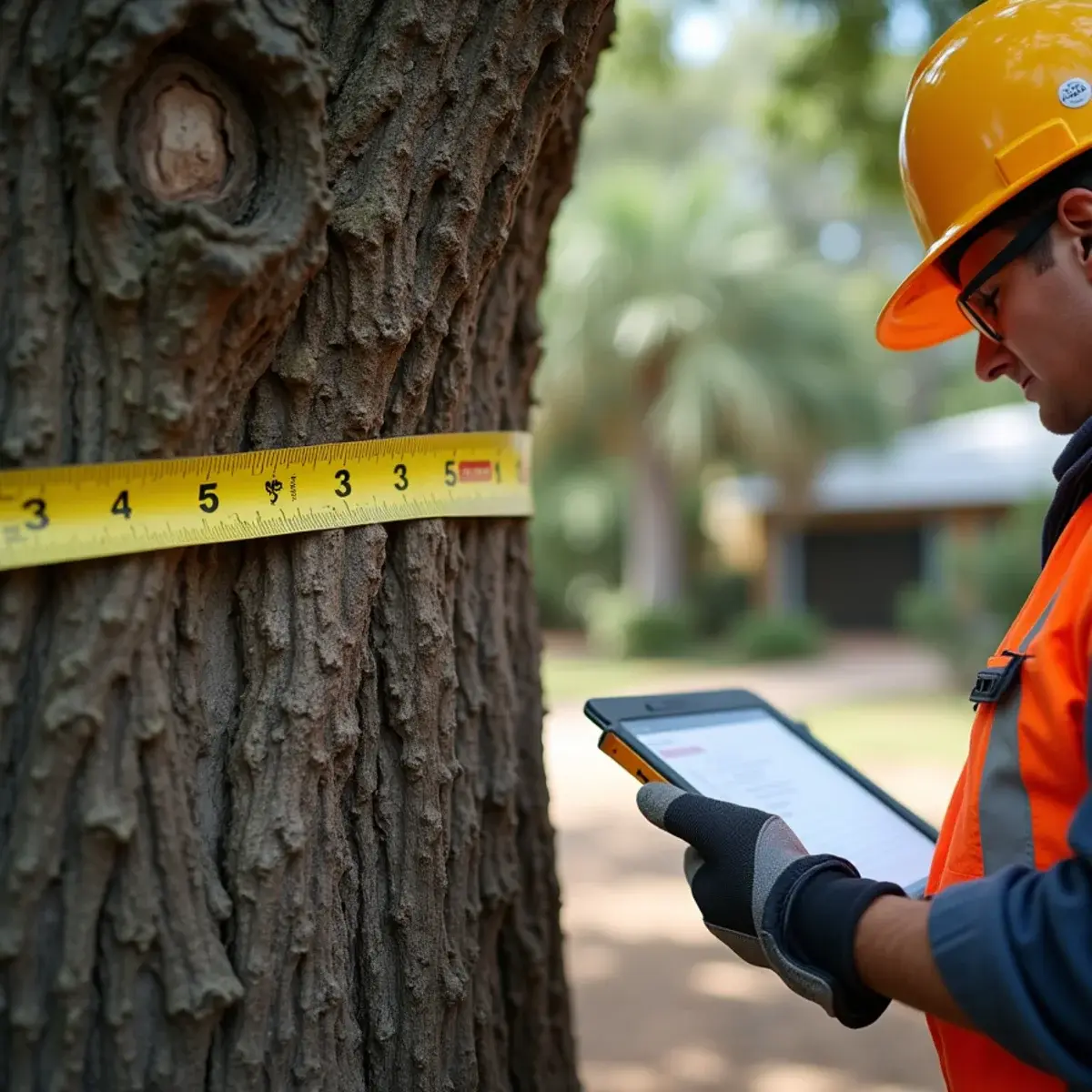
And once the immediate crisis is over, it is worth having the rest of your trees looked at. Most of what we remove after a storm had visible defects beforehand — our storm damage assessment guide covers what to check next.
Want a real answer about your specific tree?
Call +1 (208) 635-2100 for a free on-site estimate across St. Augustine and St. Johns County. We will tell you plainly what it needs — including when the answer is nothing.
- 47 five-star reviews
- Licensed & insured
- 24/7 storm response