Short answer
Every removal we do is, in a sense, a planting decision somebody made decades ago. The fast-growing water oaks and laurel oaks that dominate our removal work were planted deliberately in the postwar decades because they threw shade in ten years. Fifty years later, homeowners are paying to take them down.
If you are replanting after a removal, satisfying a mitigation requirement, or just adding shade, these are the species that work in Northeast Florida.
The best large shade trees
These are the trees worth planting for the long term — the ones that will still be there in a hundred years.
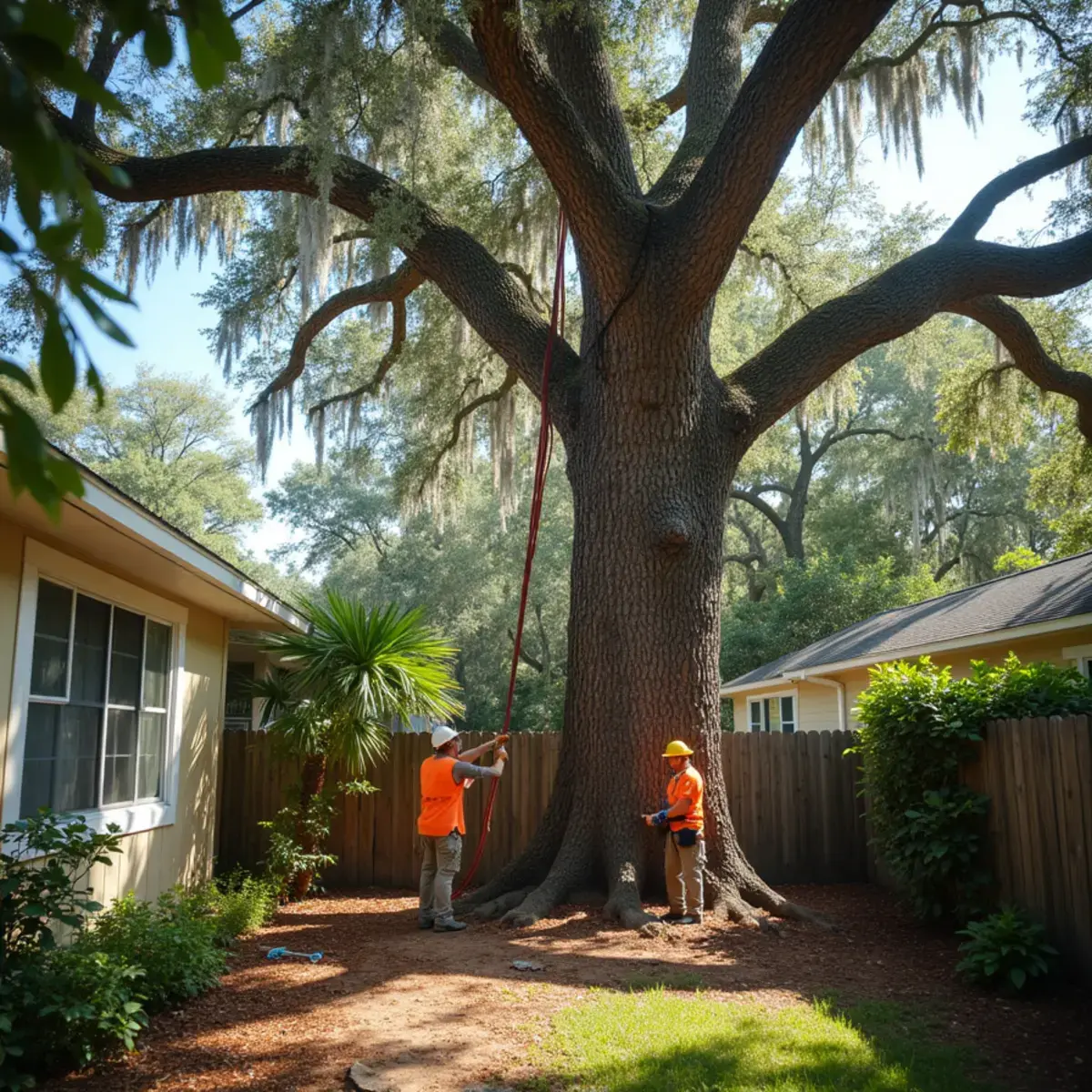
Southern live oak
The best tree you can plant here, without much competition. Extremely wind-resistant, salt-tolerant, drought-tolerant once established, and capable of living for centuries. It supports more native wildlife than almost anything else in the landscape. The trade-off is patience and space: it grows slowly and it wants at least 25 feet from structures. Our live oak care guide covers how to look after one.
Southern magnolia
Evergreen, holds up well in wind, and the flowers are the reason people plant it. It drops leaves and seed pods year-round, so it is a poor choice directly over a pool. Give it room — the natural form, with branches low to the ground, is far better than the limbed-up version.
Bald cypress
Underused and excellent, particularly on wet ground where nothing else thrives. Deciduous, surprisingly wind-firm, and long-lived. Plant it in low or damp areas and it will outperform anything else you put there.
Longleaf pine
The pine that belongs here, as opposed to the slash pine that was planted commercially. More wind-resistant, more fire-adapted, and a keystone species for local wildlife. Slow through its first years, then steady.
Best mid-size and ornamental trees
For smaller yards, near structures, or under power lines, these do the job without becoming a problem in twenty years.
Palms that earn their place
Sabal palm — the Florida state tree, and the most storm-resistant palm we have. Native, salt-tolerant, low maintenance, and it belongs here.
Pindo palm — smaller, cold-hardy, and attractive, with edible fruit if you want it.
Washingtonia and queen palms grow well here but come with maintenance costs: Washingtonia gets very tall and builds a long dead skirt, and queen palms drop enormous seed clusters and are prone to manganese deficiency. Plant them knowing you are signing up for annual palm trimming.
What not to plant
Some of these are invasive, some are just poor choices, and all of them show up in our removal work regularly.
How you plant matters as much as what
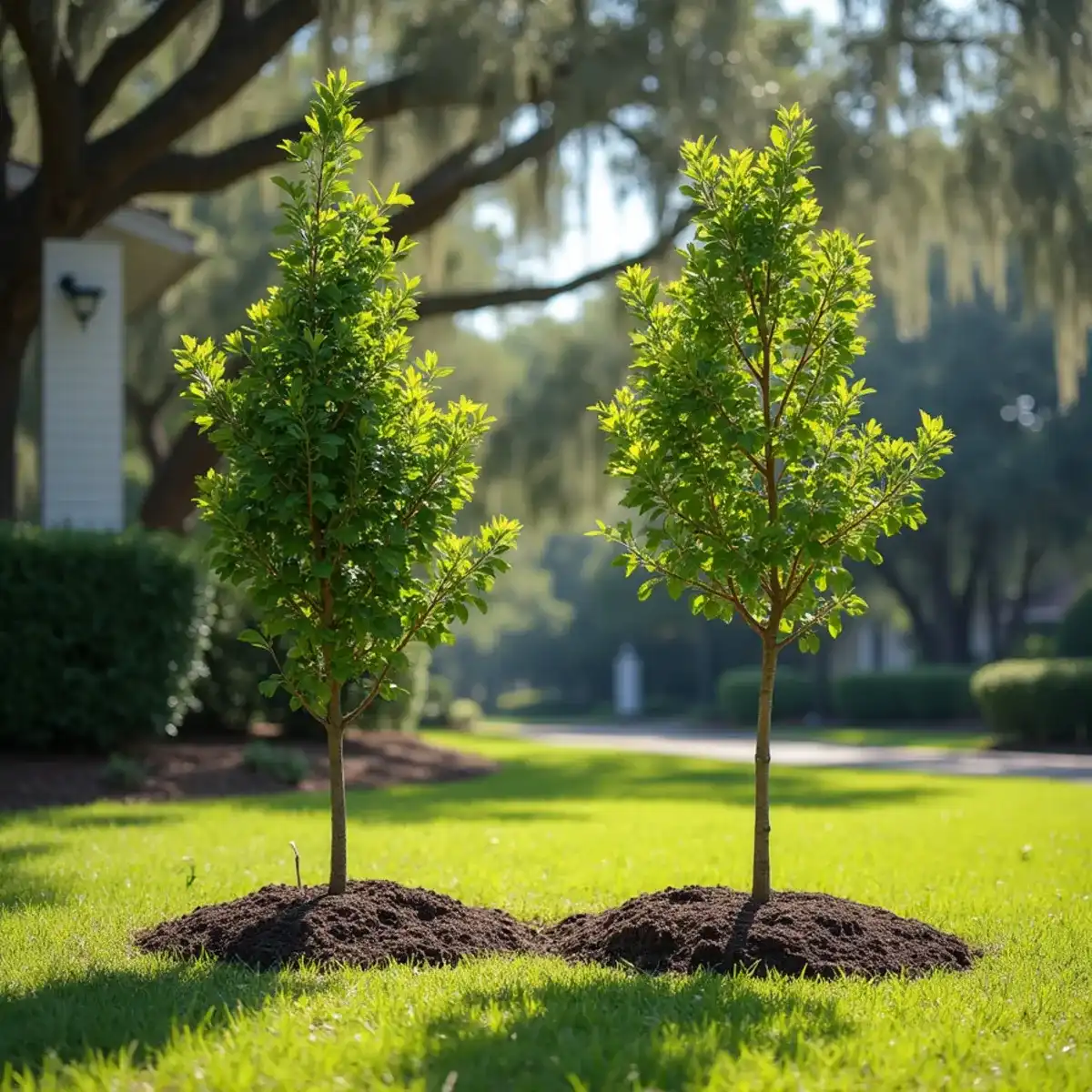
A significant share of the young-tree problems we are called about are planting errors, not species errors.
Plant at the right depth: the root flare — where the trunk widens into the roots — must be visible at or slightly above grade. Trees planted too deep decline slowly for years and nobody ever figures out why.
Correct circling roots at planting. Container-grown stock frequently has roots wrapping the root ball, and those become girdling roots that strangle the trunk a decade later. Tease them out or cut them at planting time.
Dig wide, not deep. The hole should be two to three times the width of the root ball and no deeper than the ball itself.
Mulch in a wide ring two to three inches deep, pulled several inches back from the trunk. Never pile it against the bark.
Water deeply once or twice a week for the first two years, then let it establish. Frequent shallow watering produces shallow roots — exactly what you do not want going into a storm.
Remove stakes and ties after the first year. Trees left staked never develop trunk strength.
Frequently asked questions
The bottom line
Plant a live oak. If you have room for exactly one large tree in Northeast Florida, that is the answer, and it will still be there long after everything else in the yard is gone.
If you are replanting after a removal or working through a mitigation requirement, we can talk through species and placement as part of the job.
Want a real answer about your specific tree?
Call +1 (208) 635-2100 for a free on-site estimate across St. Augustine and St. Johns County. We will tell you plainly what it needs — including when the answer is nothing.
- 47 five-star reviews
- Licensed & insured
- 24/7 storm response